Affichage des articles dont le libellé est might. Afficher tous les articles

lundi 6 juillet 2015

The Nokia N1 might be the best-looking Android tablet ever made [VIDEO]


Nokia N1 DSC08993


It wasn’t that long ago that Mobile World Congress was flooded with Android tablets. Everyone from Alcatel to ZTE had to get in on the post-iPad tablet boom. Nowadays tablet releases are few and far between. We haven’t seen many new tablets at MWC this year, but one from an unlikely source really grabbed our attention.


Back in November you may remember hearing about the Nokia N1. It came out of nowhere, but looked really nice. Nokia is showing off the N1 at Mobile World Congress, and we couldn’t pass up the chance to check it out. The first thing you’ll notice about the N1 is the design that mimics the iPad more than a Lumia device. Nokia says the design is made to fade away and not distract from the contents of the display.


Nokia N1


iPad-esque or not, the Nokia N1 is a very attractive device, and that’s not the only thing to love about it. The N1 runs stock Android Lollipop out of the box. Nokia only pre-loads one app, which happens to be the app you use the most. Z-Launcher is Nokia’s own home launcher replacement that uses contextual information to show apps you might need at the moment. It also has a handy handwriting search for apps, contacts, and bookmarks. The good news is you can simply use a different launcher if you don’t like it.


The display is 7.9-inches at 2048×1536 resolution. It’s powered by an 2.3GHz Intel 64-bit processor, 2GB of RAM, 32GB of storage, and a 5300mAh battery. On the back is a 8MP camera, with a 5MP camera on the front. One really cool spec is the USB Type-C reversible charging cable. This is the newest standard that allows the USB cable to be plugged in at any orientation.


The Nokia N1 has one big flaw: availability. If you live in China you can buy one for the equivalent of 0, but here in North America it’s nearly impossible to get. That’s a real shame because we like the N1 a lot. It has a great design, excellent build quality, top-notch specs, and stock Lollipop. If it ever does come to the U.S. for 0 it should be an easy sell.


DuckTales Remastered bounces from consoles to Android devices, but the price might scare you away


DuckTales Remastered lead


A wise man once told me that life is like a hurricane… and starting today, that raging storm of nostalgic gaming bliss is hitting Android devices in the form of DuckTales Remastered.


As the name suggests, DuckTales Remastered is the official HD remake of the amazingly wonderful (and insanely difficult) 8-bit title that launched on the Nintendo Entertainment System back in 1989. So, what kind of impact has 20+ years made? Well, the game’s 8-bit graphics have been updated with sprites so clear and vivid, you’d be hard pressed to find a single pixel. They literally look like cels taken straight from the TV show. Gameplay has also aged well, featuring that same pogo-like action that made the original such a hit.


DuckTales Remastered screenshot


Players take control of Scrooge McDuck who traverses the world in search of treasure and his kidnapped nephews, while facing off against familiar enemies like the Beagle Boys and Magica De Spell. All the levels are here and include the Himalayas, the Amazon, Transylvania, African mines and the Moon, while featuring a digitally enhanced soundtrack and voice overs from the original cast.


DuckTales Remastered screenshot 2


Disney Interactive has released DuckTales Remastered for just about every mobile platform at which includes, yes, our beloved Android devices. While that’s may sound a little steep to the casual Android gamer, keep in mind the title is still on consoles like the PlayStation 3.


Samsung Galaxy S6 Active might trade fingerprint scanner/heart rate sensor for micro SD card slot


xcover-3-


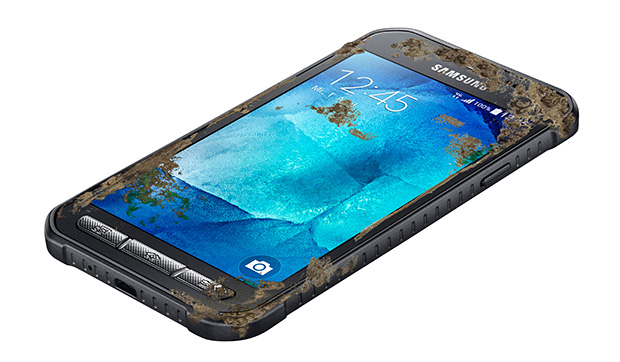
The Samsung Galaxy S6 Active might look something like the recently announced Samsung Xcover 3 (above)


The Samsung Galaxy S6 is chock-full of amazing hardware features (wireless charging, fingerprint scanner, DDR4 RAM), but when we found out some of the Galaxy S5’s best features wouldn’t be making a return — water resistance, micro SD card, and removable battery — we have to admit, we were a little bummed out.


When it came to water resistance, we had a feeling that Samsung would bring this feature back for an all new Samsung Galaxy S6 Active. Not too long later, a few leaks started making the rounds, hinting to the S6 Active’s existence and we were excited to see what else the phone bring. Today, a Reddit user claims to have had a sit down meeting with Samsung rep out of Europe (along with picture proof). When asked about Samsung Galaxy S6 Active, the Samsung rep was willing to divulge a few details about the device. First off, Samsung could be ditching the fingerprint reader/heart rate sensor for the S6 Active. While that sounds like an odd move (given the S6 Active will likely be marketed towards those who are active), he mentioned the phone will feature an SD card slot.


He also went on to mention that the camera might be “less good” than the regular S6’s and that we can look forward to a mid-summer release date. We should note, he did mention the device was still under development and that any of these hardware features could change down the road, so there might still be hope for that fingerprint reader on the retail-ready version.


With a rumored 3,500mAh battery and now a micro SD card slot, anyone else thinking about picking up the Samsung Galaxy S6 Active over the regular version?


Best Buy might have Galaxy S6 pre-sale this Friday, plans to throw in wireless charging pad [RUMOR]


Samsung Galaxy S6 Edge DSC08452


Put this one firmly at the top of the rumor category in bold letters: Best Buy might have Samsung Galaxy S6 demo units in-store as early as this Friday. That much was revealed by a Samsung rep at a Best Buy shop according to this Redditor.


Another user claiming to be familiar with Samsung (his posting history somewhat solidifies that) suggested the user was, in fact, correct, and a horde of other users jumped in to corroborate the information.


What’s more is that they revealed a couple of details about Best Buy’s pre-sales process:


  • Pre-sales commence March 27th, the day the demo units are expected to arrive in stores.

  • Pre-sales will only be held for AT&T, Sprint and Verizon, as usual.

  • Launch is expected to be April 10th for all 3 of those carriers as Samsung has previously announced.

  • Pre-orderers will get some sort of “free device” with their purchase, though which exact device remains to be seen. The supposed Samsung employee suggested it would be a wireless charging pad worth .

  • Mostly all stores with a Samsung Experience booth will have the regular Samsung Galaxy S6, but not every store will have the Samsung Galaxy S6 Edge. Be sure to call and check once the day arrives.

  • Some Samsung Experience agents might already be walking around with a Samsung Galaxy S6 and S6 Edge as part of their training. If you ask around you might find one nice enough to give you a quick showing!


That was about the extent of the information available. Note that rumors are always to be taken with a heavy grain of salt, especially when the source is an unchecked (but usually honest) community.


So first movement on getting your Samsung Galaxy S6 or S6 Edge secured could happen as soon as this Friday. There’s only one question left — have you decided to buy one yet? Let us know!


[via Reddit]


Google might have accidentally released a new “Interactive Events” app in Google Play


interactive events app


Someone at Google’s Mountain View headquarters may have jumped the gun on publishing a new app Google is working on. It’s called “Interactive Events,” and at first glance it appears to be a second-screen app that’ll give you more information about whatever event you might be attending.


For something like Google I/O, you might get an event code or QR code to scan before the keynote and get biographies and speaking notes from any of the keynote speakers in attendance. It sounds like it’d be a pretty neat tool to make sure you have all the info you need about the events you’re attending.


There’s just one problem: the app seems to be unfinished. Upon downloading it from Google Play we’re met with the following dogfooding dialog box:


dogfood interactive events


Dismissing the dialog and accepting the app’s terms of use takes us to a menu to scan a QR code and enter an event code, but we obviously don’t have any valid codes to see what lies beyond that. A couple of screenshots from Google Play give us a decent idea of what to expect for now, but we’ll have to wait until Google clears things up to get a look for ourselves.


google interactive events


Download it if you want, but it’s pretty useless right now and we’re hoping some light is shed on it before too long.


Google’s driverless car might have airbags on the outside to protect pedestrians


TNO-Airbags-537x354


While Google would contend that their driverless vehicles are more safe than a human controlling the wheel, the public likely won’t allow a car of its type to take to the road without some added safety precautions. One of those precautions could be the inclusion of external airbags in the event that the car unfortunately finds itself in an accident.


A patent filed by the company details a system where airbags would be deployed in the event of a crash or coming in contact with a pedestrian. While this wouldn’t eliminate the risk of damage or injury, it could lessen the sting a lot more than if it were a direct head-on collision.


Volvo has already tested vehicles with external airbags before, but this patent suggests Google could use some sort of memory foam-like foundation behind the airbags to lessen the chance that it sends a pedestrian flying to the pavement in the event of being hit.


exterior airbags patent google


Visualizing such an accident with a driverless car might bring up some brutal images in your head, but it’s worth remembering that Google’s driverless cars will drive at moderate speeds instead of pushing up against the speed limit every chance it gets. A crash might still do some damage, but we doubt it’d be going fast enough to completely crush you.


It’s worth noting that Google’s driverless cars have only been involved a couple of accidents to date. The first accident wasn’t its fault — it was rear-ended by a carelesss driver. The other accident happened in manual drive mode at the hands of one of the testers.


Couple that clean track record with the various sensors the car will have to come to a complete stop before inadvertently hitting a vehicle or person, and you’ll probably find you’re more safe inside or around one of Google’s cars than anything driven on the road by your average human being. Still, Google doesn’t want to take any chances so we’d be surprised if they don’t go ahead with this idea.


[via QZ]


Your next Android phone might come with Waze pre-installed


waze


Every time you start up a new Android device for the first time you see a bunch of pre-installed Google apps. These apps include the Play Store, Gmail, YouTube, Maps, Chrome, and more. All of these services are bundled together in a package that Google offers to handset makers. It’s Google’s way of having some sort of control over a free open-source OS. If you want to use the Play Store, which all Android users expect to have, you’ll also have to include a bunch of other Google services.


Google may be adding yet another app to this bundle. Back in 2013 Google acquired the ultra-popular crowd-sourced traffic service, Waze. Since then they have been slowly adding some of Waze’s features into Google Maps, but the data from Waze is still gathered from actual people. In order to get even more users on Waze they will be adding it to the Google bundle.


This is awesome news for anyone that uses Waze. There is already a massive user base, but this is a service that only gets better with more users. Waze will also start to display Amber Alerts if you’re driving in an area that has one issued. All of this news should cement Waze’s position as one of the best apps to have in your car.


[via The Verge]


Google Play might soon disclose whether an app shares your data with third-parties


google-play-ballons-featured-LARGE


Yesterday, Google announced that they’d started employing a new app review process to help keep the spoiled apps out of Google Play. They’d also started issuing a questionnaire for developers to fill out about any and every app they have on Google Play.


content-rating-app-category-selection


The purpose of this questionnaire is for Google to be able to determine what sort of age-restricted rating to issue it in each region the app is available (which is mostly necessary to make sure regulatory bodies in a certain country won’t block access to your app).


You fill it out, and Google will spit back a rating appropriate for each major content ratings board that exists. You’ll see the ratings Phandroid’s app received in the screenshot straight ahead:


content-rating-phandroid-ratings


The questionnaire asks a few interesting questions of developers. Most of it pertains to the presence of violence, sexual content and general social interactions that could be inappropriate for youngsters, but a “miscellaneous” section in the questionnaire asks developers to disclose a couple of other interesting details:


  • Whether your app shares personal information with third-parties (with personal information being defined as your name, address, email address, phone number, date of birth, national insurance number, financial information and other private records)

  • Whether your app shares your location data with other users or third-party apps (for example, showing your location on a publicly-viewable map or being able to post your coordinates or a link to a map with your location on a social network, but not necessarily using your location within the confines of the app to enhance its functionality)


content-rating-privacy


This raises a very interesting question: will this information eventually be listed in Google Play? Google doesn’t spell it out, but it sounds like they might eventually require this information to be transparent before a user even downloads the app in Google Play. Google has already long shown information about in-app purchases in an app’s Play Store listing ahead of downloading it, and that question also exists on the very same questionnaire.


So how would Google communicate the information to a user if they opt to show it? It’s likely any mentions of the presence of these elements would go in the same window that shows you what permissions the app has (such as whether it can access your contacts or use internet data) before downloading it to your phone or tablet.


Another point to consider is the factor of honesty: what’s stopping a developer from simply lying on the questionnaire? It’s easy to bust a developer who says their app doesn’t have any violence and then find out there’s a murder scene in the opening credits of a game, but what happens about stuff that isn’t visibly represented on the surface of the app?


While most top developers tend to be honest, open and upfront about how they use your data (you’ll often find that information in an app’s terms of use if you’ve ever bothered to read them), there’s always the chance that a devious coder — or someone who simply doesn’t know any better — could be manipulating and sharing your data behind the scenes.


Perhaps it’s something to be worked out by Google and their new review process, and perhaps it’s something their cerberus-like app scanning engine can already detect. There’s not enough information in the open to know for sure, but we aim to find out how Google plans to approach that issue and will certainly look to share any response we get.


In the meantime, be sure to take a look at a few screens from the questionnaire process above to get an idea of the sort of details developers have to disclose to make sure their apps are appropriately rated for global distribution.


Motorola might be using Snapdragon 808 and 810 in latest flagships


Motorola Logo


Say what you want about the Snapdragon 810’s supposed overheating issues, but it seems more companies are going to use it in their 2015 flagships. One such company seems to be Motorola, with a trusted tipster leaking word that at least one of their latest devices will use the oft-maligned chipset.


That particular phone would be the XT1585, which is said to be a Verizon device with QHD resolution and 640 DPI (codenamed Kinzie). Meanwhile, the XT1578 or XT1097 — both codenamed “Clark,” with the former being Verizon-specific — will look to run a Snapdragon 808. Those will also enjoy QHD resolution (albeit it at a slightly lower DPI of 560).


There isn’t much other new information about these devices so we’re still not exactly sure what Motorola’s plans for 2015 look like. For what it’s worth Motorola has seemingly started to mask the codenames of their devices using model numbers of phones that already exist. Evidence that the leakster is hot on the trail? Perhaps, but we suppose that means little in the end — we know Motorola is going to be bringing some heat later this summer, and we hope official word about their plans isn’t far off.


[via Reddit]


Samsung Galaxy Note Edge 2 might not have all the high-end specs of the Galaxy Note 5 [RUMOR]


note-4-note-edge-backs


If previous Galaxy Note release schedules are any indication, we’re still at least a good 4 months away from Samsung revealing any news on a Samsung Galaxy Note 4 followup. Looking at the Samsung Galaxy S6 and Samsung Galaxy S6 Edge, it only makes sense to assume that Samsung would plan something similar for the Samsung Galaxy Note 5. Looks like that might not be the case, if the latest rumors out of SamMobile hold true.


According to their sources, Samsung could be planning on a single Galaxy Note 5 model equipped with all the high-end features you’d expect from a phablet flagship: 2K or 4K UHD display, gobs of RAM, premium build materials and an Exynos 7422 processor that features CPU, GPU, and RAM on a single chip. No surprise there, really.


But when it comes to a follow up the Samsung Galaxy Note Edge sporting Samsung’s curved AMOLED display — codenamed “Project Zen” — the curved phablet’s specs may not be as high-end as the Note 5. It seems we could be looking at more of a mix in hardware, with a 5.4-inch or 5.5-inch Super AMOLED double-sided curved display (like on the S6 Edge), hexa-core Snapdragon 808 processor, 16GB internal storage, 16MP camera with OIS, and an 8MP front-facing shooter. Of course the S Pen will also be included, but it’s interesting to see Samsung cutting corners with this new Note Edge model.


Of course, before you get too upset, nothing is set in stone and things can, — and more than likely will — change in time for the phone’s release. If true, would any of you be disappointed in a slightly less high-end Galaxy Note Edge 2?


Samsung might fix Galaxy S6 and S6 Edge’s aggressive RAM management in future update


Samsung Galaxy S6 Edge DSC09263


When it comes to Android devices, let’s be clear: RAM is meant to be used. What’s the point of having 3GB of DDR4 RAM if your phone keeps closing out apps the moment you leave them to do something else on the device? That’s the issue some people are reporting with the Samsung Galaxy S6 and S6 Edge. Whether it’s buggy Lollipop code, or just Samsung’s new and “improved” TouchWiz user interface, it’s obvious something is up. You’ll find numerous reports of around various forums online, with a popular thread on XDA talking about the issue here.


In case you need a little more proof, PhoneBuff recently put together a Galaxy S6 vs One M9 speed test video where he timed himself opening a variety of the same apps across both devices. While the Galaxy S6 was definitely quicker at opening these apps, it was during the “second lap” that the HTC One M9 came out ahead thanks to the phone keeping these previous apps open in the background. The Samsung Galaxy S6 had to reload each and every app it once had open only moments before, costing it the win in the end. Check out that video below.


It’s obvious something is up, but whether this was an intentional move by Samsung or yet another software bug, it appears they could be working on a fix. A Samsung rep seemingly acknowledged the bug on their UK Facebook page, telling one user that “micro-updates” to address issues relating to performance and stability are already scheduled to rollout and to keep an eye out.


A specific time frame wasn’t given, or even confirmation that the RAM problem is, in fact, being addressed (it was just a Samsung social media manager after all), so we’ll just have to wait and see. It’s possible some of these issues could be patched up in the Android 5.1 update one lucky Edge user received a few days ago, but there’s no way to know for sure.


Software and hardware bugs are a common occurrence amongst early adopters. We’ve seen more than a few comments from Android fans who typically like to wait a few months after a smartphone’s launch before diving in, giving hardware manufacturers all the time they need to address bugs and other unforeseen issues. We’ll let you know if we hear anything else.


[UberGizmo]


Playboy NOW app for Android is surprisingly safe for work, might actually read it for the articles


Playboy NOW Android


The best part about owning a mobile device is the ability to keep up with news and other random going-ons from around the internet. Oh — and hot babes. The internet is full of them, but because man cannot liveth on boobs alone, Playboy has introduced a new app into the Google Play Store that puts a focus on articles… and babes.


Since Playboy knows you’re probably not going to be browsing for nudes on-the-go or while at work, the all new Playboy NOW app is more or less suitable for work. Don’t get us wrong, there are still plenty of busty babes to be found, but this is more PG-13 content. It’s essentially a retooled version of the Playboy for Android app that launched last year which had articles, but required you to pay for the girly galleries. Playboy made the move after they discovered that nearly 80% of their traffic was now coming from mobile devices so they felt it was time to cater to these users.


This time around Playboy NOW features more written articles and viral news from around the net, plenty of videos and of course, galleries of scantily clad women. It’s basically a men’s magazine in easy to digest app form, with content being repackaged from Playboy.com’s recently relaunched website (only without all the nudes). There’s also a section called The Daily list which features 5 articles (either written, photo galleries, or video) from the day and of course, exciting content revolving around Playboy’s endless well of Playmates.


Suddenly that lame excuse you told your wife about reading Playboy for the articles might actually be true.


You might be able to use Project Fi on a Nexus 5 (and other devices) with one simple trick


Nexus 5 shortcuts DSC05742


Want to try Project Fi (more invites are rolling out!) but don’t want to shell out for the Nexus 6 required to use it? One user on XDA reportedly found a way to get Project Fi activated for use on their Nexus 5.


The skinny of the story is that they simply used a Nexus 6 to activate Project Fi service, and made use of a nanosim-to-microsim adapter to use the SIM card inside of a Nexus 5. Service was said to be perfectly functional for incoming and outgoing calls, as well as full LTE data, but the user was unable to verify whether Google’s hand-off technology (to automatically switch between Sprint, T-Mobile and WiFi) was working.


There’s also the issue that there haven’t been many other reports of success. Most people who have tried (and failed) to activate Fi for use on a Nexus 5 tried to activate service on the Nexus 5 itself, but to our knowledge this is the first and only report of someone using a Nexus 6 to give the initial activation a go.


There are a couple of issues to note for anyone whose ears suddenly perked up at the thought of not having to own a Nexus 6 to use Project Fi:


  • It’s unlikely Google’s network hand-off technology will be supported, as Google originally confirmed there’s a mixture of software and hardware components needed to facilitate it.

  • Your device could be limited to use on T-Mobile’s network only as Sprint’s network requires an MEID number that’s been approved for service.


So, all of that is to say that using Project Fi on anything other than a Nexus 6 would be akin to using a smartphone on any standard MVNO carrier. Unless you’re a huge fan of how Google runs the administrative side of the service — such as pricing (which isn’t even the best value you can find) and plan features — then there’s really no real current benefit in using Fi on other devices.


But if all of that is OK with you then, by all means, be sure to give it a go if you can borrow a friend’s Nexus 6 for activation. Information is still being gathered so there are still a lot of questions as to the specifics of how Fi service would work on different devices. If you happen to try this approach be sure to report back with your results — whether that’s here or over at the original XDA thread — to help contribute whatever information you can.


Spotify might soon match Apple Music’s 6-person $15 family plan


Spotify


Earlier today Apple formally unveiled Apple Music, their upcoming music streaming service. With plans to launch on both Windows and Android, it’s clear they’re gunning for big dogs like Spotify, the current reigning king of music streaming. Aside from social aspects and a live global radio station, Apple Music looks to beat Spotify on price, a very important area for those that have yet to jump into the world of all-you-can-eat music streaming.


Not so much on their individual plans which are both evenly matched at (although Apple Music offers 3 months free, while Spotify charges 99 cents), but on their family plan. Apple Music is only asking to give up to 6 people access to their own personalized music space — a price Spotify only offers to 2 users (50% off for each additional account).


Because competition is almost always a good thing, The Verge is now reporting that Spotify — who already experiments with different pricing structures in various markets — could soon match Apple’s offer. According to Jonathan Price, Spotify’s global head of communications and public policy, Spotify plans on offering up these more competitive pricing plans everywhere “in the near future” although he didn’t offer up specifics.


Spotify only has a few more months to nail down pricing, but with Apple’s billion dollar surplus on hand, how can they possibly compete?