Affichage des articles dont le libellé est able. Afficher tous les articles

lundi 6 juillet 2015

SanDisk was able to stuff 200GB of storage space inside their latest microSD card


SanDisk-microSD200gb-hero-blnk


You thought SanDisk’s 128GB microSD cards were insane? The company has just announced another huge milestone — a whopping 200GB of data inside a chip smaller than the size of a nickle. It’s a UHS-1 Class 10 chip, which means it can transfer data at up to 90 megabytes per second.


So why not 256GB, the natural step up from 128GB? It’s likely SanDisk was unable to physically fit enough circuitry, doodads and whatever else makes these things tick inside such a compact form factor. It’s possible that could change with refined engineering techniques in the future, but for now this is as high as it gets.


You shouldn’t bat an eyelash at 200GB. It’s absolutely insane, and it’s even crazier to know that it can work in any device that supports microSDXC cards of 64GB or higher (which includes the newly-announced HTC One M9, but unfortunately not the just-as-fresh Samsung Galaxy S6).


Of course, you’d have to be willing to spend the 0 that this thing will cost to start so if you have that sort of money to throw around on micro storage chips you’ll likely be able to afford a smartphone that can utilize it. The chips are due Q2 2015.


[via SanDisk]


Developers will be able to make their own pages in Google Play


Google Play Store wm watermark


Google has announced developer pages for Google Play. What this allows developers to do is create their own section in Google Play to show off all their Android apps.


It’s already possible to view a developer’s list of apps by clicking a their name when viewing their app listing in Google Play, but developer pages will let developers highlight their best and most recent apps, as well as provide more detail to the user about the company or individual behind them. It’s a great way for fans to find and keep track of their favorite developers’ apps.


Also coming to Google Play for developers is the ability to A/B test your app listings. What this means is you’ll be able to experiment with different sets of graphics, app descriptions, screenshots and titles for your Google Play listing.


You can have both listings exist simultaneously, with users seeing one or the other at random. This’ll allow you find out which listing style performs best for driving downloads, a great tool for developers who want to make sure they’re doing everything they can to maximize their chances for success. It shan’t be long before you developer types are able to get your feet wet with all this stuff in the developer console, and we’re be sure to update you once those options become available.


This cool virtual reality headset claims to be able to track eye movement [KICKSTARTER]


fove heroe


Talk about the HTC Re Vives and the Oculus Rifts of the world all you want, but no one is doing anything quite like what FOVE is promising. Their virtual reality headset — which is currently enjoying a successful funding campaign on Kickstarter — does more than just track head and body movement: it can even track your eyes.


FOVE claims to be able to read the user’s eyes to determine where, exactly, they’re looking. Not only can it tell which direction the eyes are looking, but it can even tell how far into the distance you’re gazing. This sort of tracking makes it possible to implement levels of detail beyond anything we’d imagine possible, such as having digital characters notice when you’re looking at them, or looking at something else.


It’s a seemingly ordinary virtual reality headset otherwise, but this added level of dimension is enough to take it out of the “ordinary” category and into the “holy crap we really want one” category.


fove eye tracking


The project has already raised close to 0,000, which is more than enough to fulfill the original project goal of 0,000. The earliest units are scheduled to ship May 2016, one of which you can claim for as little as 5. Be sure to check out all your options for pledging right here, and check out the video above if you’re wondering about the types of virtual reality experiences that could, well, become reality with FOVE.


You might be able to use Project Fi on a Nexus 5 (and other devices) with one simple trick


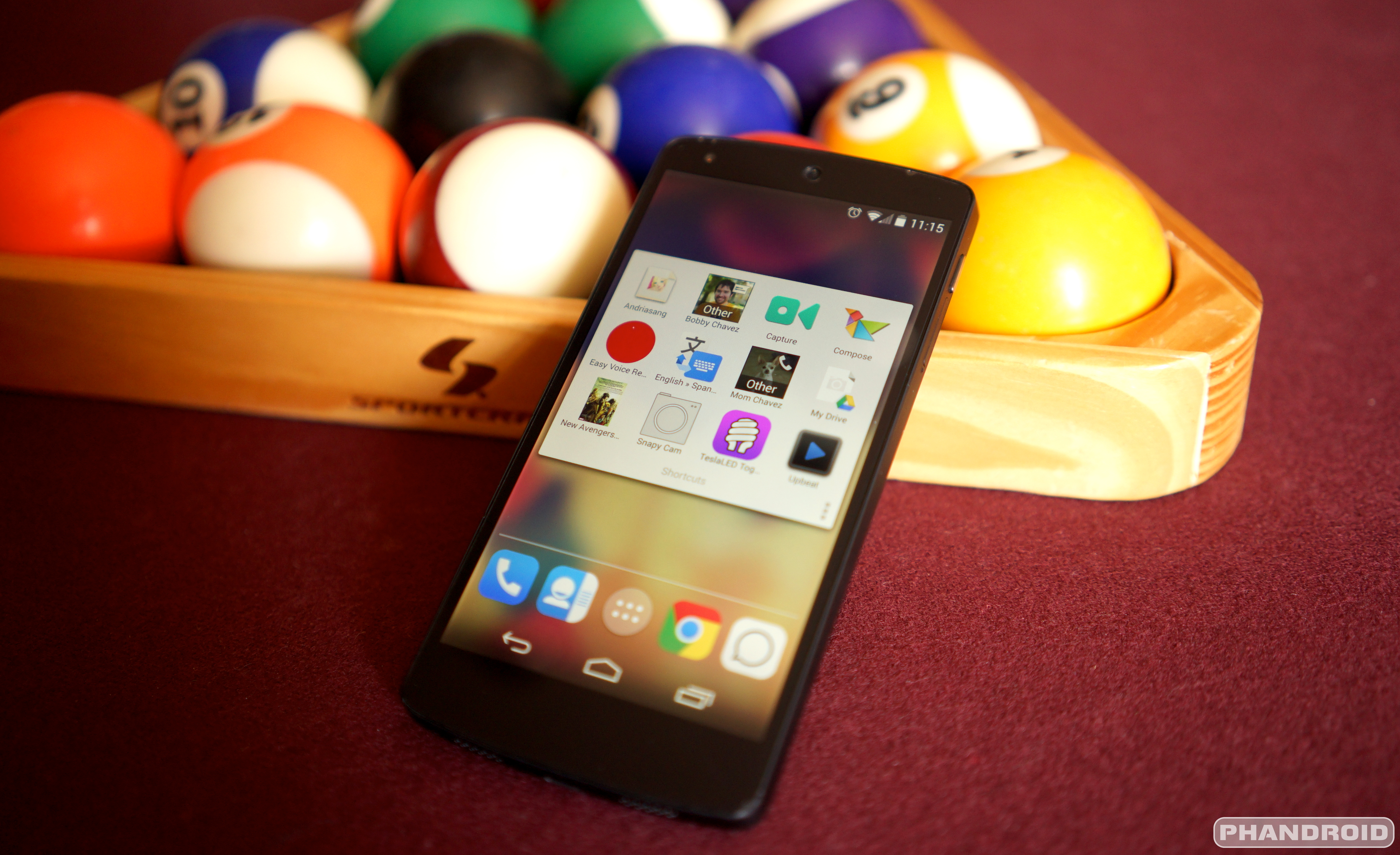
Nexus 5 shortcuts DSC05742


Want to try Project Fi (more invites are rolling out!) but don’t want to shell out for the Nexus 6 required to use it? One user on XDA reportedly found a way to get Project Fi activated for use on their Nexus 5.


The skinny of the story is that they simply used a Nexus 6 to activate Project Fi service, and made use of a nanosim-to-microsim adapter to use the SIM card inside of a Nexus 5. Service was said to be perfectly functional for incoming and outgoing calls, as well as full LTE data, but the user was unable to verify whether Google’s hand-off technology (to automatically switch between Sprint, T-Mobile and WiFi) was working.


There’s also the issue that there haven’t been many other reports of success. Most people who have tried (and failed) to activate Fi for use on a Nexus 5 tried to activate service on the Nexus 5 itself, but to our knowledge this is the first and only report of someone using a Nexus 6 to give the initial activation a go.


There are a couple of issues to note for anyone whose ears suddenly perked up at the thought of not having to own a Nexus 6 to use Project Fi:


  • It’s unlikely Google’s network hand-off technology will be supported, as Google originally confirmed there’s a mixture of software and hardware components needed to facilitate it.

  • Your device could be limited to use on T-Mobile’s network only as Sprint’s network requires an MEID number that’s been approved for service.


So, all of that is to say that using Project Fi on anything other than a Nexus 6 would be akin to using a smartphone on any standard MVNO carrier. Unless you’re a huge fan of how Google runs the administrative side of the service — such as pricing (which isn’t even the best value you can find) and plan features — then there’s really no real current benefit in using Fi on other devices.


But if all of that is OK with you then, by all means, be sure to give it a go if you can borrow a friend’s Nexus 6 for activation. Information is still being gathered so there are still a lot of questions as to the specifics of how Fi service would work on different devices. If you happen to try this approach be sure to report back with your results — whether that’s here or over at the original XDA thread — to help contribute whatever information you can.


You will soon be able to officially unlock your LG G4’s bootloader


LG_G4_18


LG has been one of the odd souls out of the “let’s give depeer access to developers” party, but that looks to be changing soon. The company’s developer website has been updated with instructions for officially unlocking the LG G4’s bootloader.


There’s a catch here, naturally. It’s only possible to do this for one model of the LG G4, which is the European H815 variant. LG’s site says select “devices” will gain that ability eventually so you can bet there will be more.


We’re not sure if this courtesy will ever be extended to the likes of the LG G2, LG G3 or any of LG’s other models, but we’ll be looking to find out. In the meantime, if you’re the lucky owner of the necessary variant and have been waiting for an official bootloader unlock then LG has everything you need right here (note that it’s liable to void your warranty and that it’s a process which can’t be undone).