Affichage des articles dont le libellé est future. Afficher tous les articles

lundi 6 juillet 2015

Google says you can expect USB Type-C to hit Android devices in the near future [Duh]


Chromebook Pixel 2 USB 3.1 Type-C


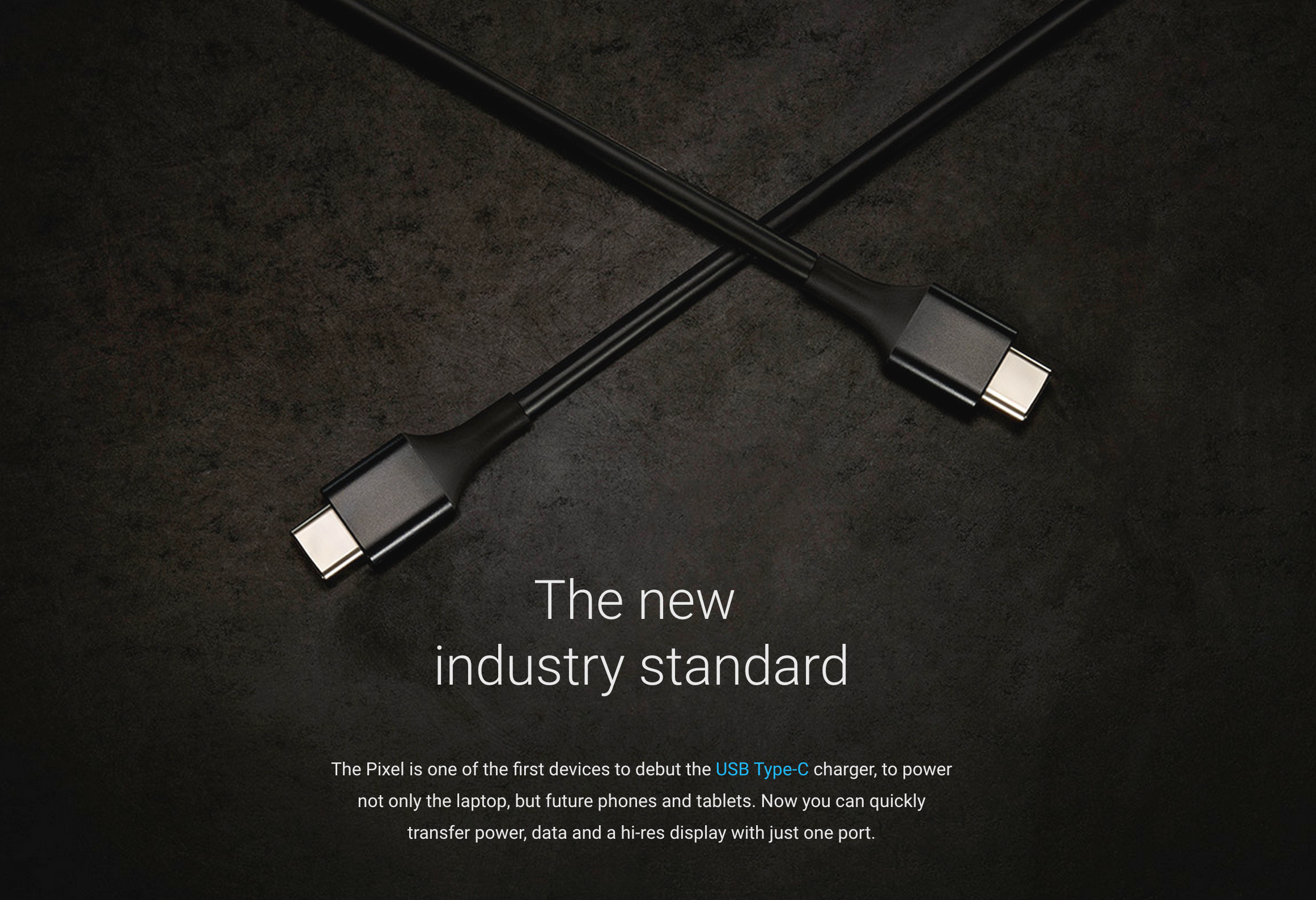
USB Type-C is fixin’ to become the new industry standard in how we transfer, power, and display content to external monitors in our next generation devices. Earlier today, we saw the arrival of the all new Chromebook Pixel 2, coming equipped with two USB 3.1 Type-C ports (because it’d be downright silly to only offer only one, right?).


For those unaware, USB Type-C is symmetrical, meaning there’s no “wrong way” to insert a connector into the port. All those late nights, fumbling around trying to nail your USB cable into your phone like a kid on prom night will finally be a thing of the past. And we couldn’t be happier.

USB Type-C


With Google officially making the move to Type-C, you might be wondering if we’ll soon see this port in future Android devices. In what should be a surprise to no one, that answer is a resounding yes. In their latest Chromebook Pixel short on YouTube, Google Product Manager Adam Rodriguez (1:14) says specifically:


“We at Google are very committed to the USB Type-C spec, expect to see this in a lot of Chromebooks and Android phones in the near future.”


Did Google actually say we’ll see them use Type-C in the next Nexus device? No. But now that they’ve officially committed to it, it’s probably more than likely. Our bodies are ready. You can watch Google waxing poetic on the new connector that will soon come equipped on their over-powered netbook and future devices in the video down below.




Google code commit hints to multi-window app support arriving in future Android version


Galaxy S5 Multi-window


Google I/O is just around the corner and we have a good feeling Google will talk about/detail new changes headed to their mobile OS. Changes much bigger than what 5.1 — rolling out now to Nexus devices — introduced.


With that release now in the books (which mostly dealt with big fixes, dual SIM and HD Voice support) you may be wondering to yourself what could be ahead for future versions of Android. Well, a gem discovered in an AOSP framework code commit is shedding some light on a big new feature coming soon to Android: multi-window apps.


commit ed7698c8ed66b959d723caa7bfe01530d306fb8d
Author: Craig Mautner cmautner@google.com
Date: Tue Jan 27 11:44:59 2015 -0800


Defer tap outside stack until multiwindows


Taps outside of the stack boundary were causing the current app to
lose focus. This led to timeouts waiting for the app to respond.


Disabling the tap recognition keeps the focus from changing. It will
be reenabled for multiwindows.


As you can see above, there aren’t very many details, just a quick reference. While having multiple apps displayed onscreen at once isn’t a feature that everyone will use, it could be great for Android power users who need more multitasking than what stock Android provides. Really, the idea isn’t anything new. Samsung’s custom TouchWiz UI has allowed for multi-window apps for a while now, but exactly how Google plans on implementing this feature remains to be seen.


What say ye? Would you use multi-window apps if baked into Android in the near future?


[AOSP]


Facebook Messenger could be adding games in the near future


Facebook Messenger 1


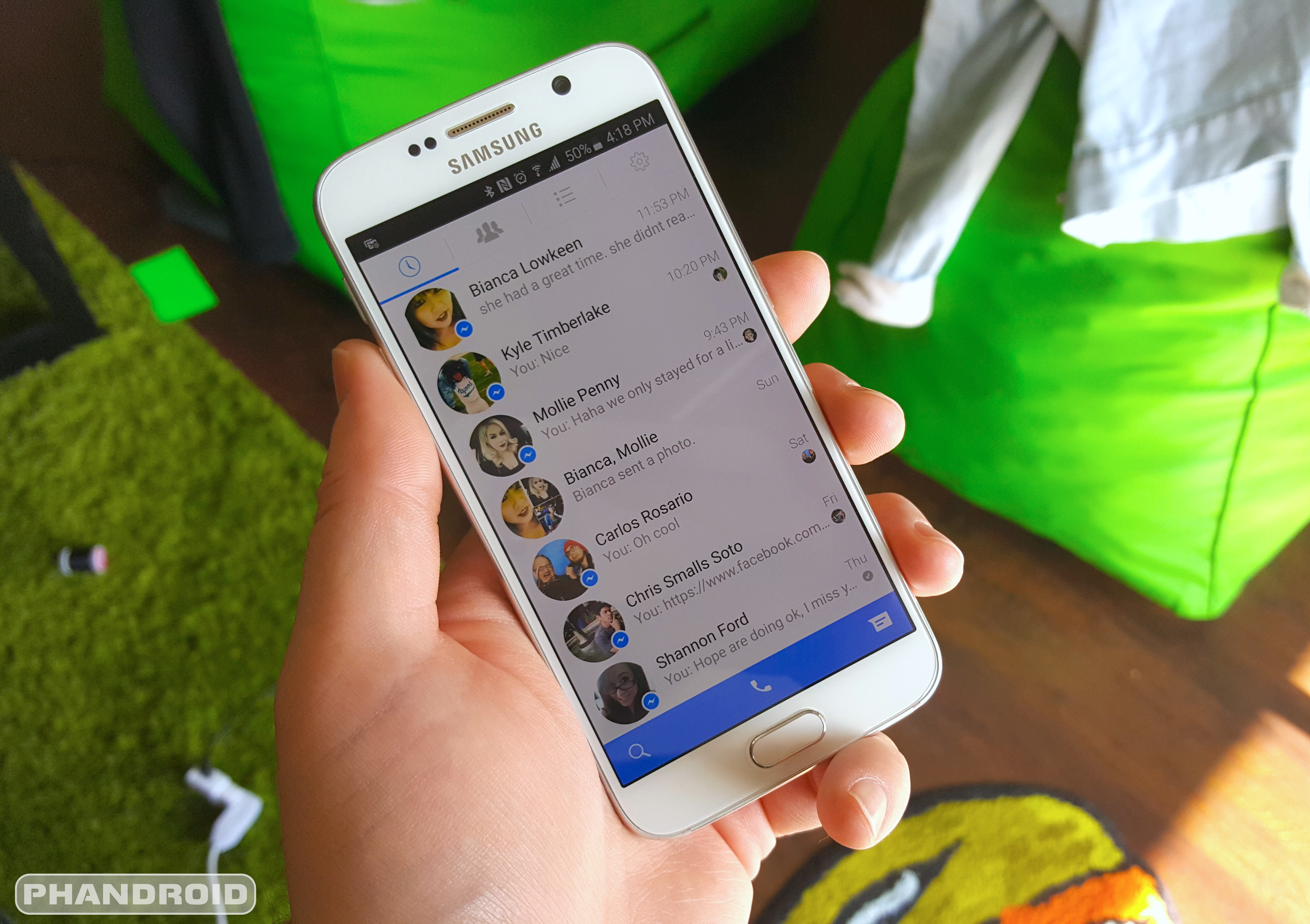
Facebook Messenger officially became its own platform back in March, so we knew the social network geniuses over at Facebook were brainstorming new ways they could add more exciting features into the service. Right now the in-app apps (app-ception) are mostly related to chat like functions, things like adding GIFs, stickers, or video clips — things that enhance conversations.


We thought it was a great idea, even if we weren’t crazy about the idea of the app becoming more bloated than it already is. As reported by The Information, apparently adoption of these new Messenger apps hasn’t lived up to what Facebook (or developers) had hoped. Now it seems the company will look towards gaming to help pour some fuel on the fire and create added interest.


It makes sense too. Just look at all the casual games out there (Words with Friends, or Evil Apples). These are all games that heavily rely on social aspects to connect gamers with each other. Tapping into that could mean added revenue for developers looking to publish titles on Messenger. While the options are nearly endless, these games could face the same pitfalls as current Messenger apps which developers say are having trouble gaining exposure.


Perhaps a stand-alone Messenger app store is in our future?


Samsung might fix Galaxy S6 and S6 Edge’s aggressive RAM management in future update


Samsung Galaxy S6 Edge DSC09263


When it comes to Android devices, let’s be clear: RAM is meant to be used. What’s the point of having 3GB of DDR4 RAM if your phone keeps closing out apps the moment you leave them to do something else on the device? That’s the issue some people are reporting with the Samsung Galaxy S6 and S6 Edge. Whether it’s buggy Lollipop code, or just Samsung’s new and “improved” TouchWiz user interface, it’s obvious something is up. You’ll find numerous reports of around various forums online, with a popular thread on XDA talking about the issue here.


In case you need a little more proof, PhoneBuff recently put together a Galaxy S6 vs One M9 speed test video where he timed himself opening a variety of the same apps across both devices. While the Galaxy S6 was definitely quicker at opening these apps, it was during the “second lap” that the HTC One M9 came out ahead thanks to the phone keeping these previous apps open in the background. The Samsung Galaxy S6 had to reload each and every app it once had open only moments before, costing it the win in the end. Check out that video below.


It’s obvious something is up, but whether this was an intentional move by Samsung or yet another software bug, it appears they could be working on a fix. A Samsung rep seemingly acknowledged the bug on their UK Facebook page, telling one user that “micro-updates” to address issues relating to performance and stability are already scheduled to rollout and to keep an eye out.


A specific time frame wasn’t given, or even confirmation that the RAM problem is, in fact, being addressed (it was just a Samsung social media manager after all), so we’ll just have to wait and see. It’s possible some of these issues could be patched up in the Android 5.1 update one lucky Edge user received a few days ago, but there’s no way to know for sure.


Software and hardware bugs are a common occurrence amongst early adopters. We’ve seen more than a few comments from Android fans who typically like to wait a few months after a smartphone’s launch before diving in, giving hardware manufacturers all the time they need to address bugs and other unforeseen issues. We’ll let you know if we hear anything else.


[UberGizmo]


Report: Blackberry will use Android on a future smartphone


BlackBerry


A couple of years ago it might have been a bit taboo to hear of companies like Nokia and Blackberry using Android after years of doing their own thing, but it seems to be commonplace by now. A Reuters report suggests Blackberry will be taking a crack at making an Android device of their own at some point down the line.


Blackberry’s big heavy-hitting move was to regain the large pool of market share they lost with the launch of Blackberry 10 devices. Those devices and the overhauled OS were quite good by Blackberry’s standards, but tech moves too fast and Android’s explosion in popularity seems to have been too much for the Waterloo company to overcome.


Reuters reports that the device would house a slide-out keyboard, a detail we’re sure many past Blackberry fans are pleased to hear considering keyboards are a huge selling point of Blackberry hardware.


Using Android on a new smartphone would seem to confirm that Blackberry is looking to be more of a software and services company rather than take on Apple’s strategy of us against the world (but even they are starting to come around these days). We’ve already seen great evidence of that with the launch of Blackberry Messenger on iOS and Android, as well as Blackberry’s enterprise-focused BES suite that helps businesses maintain ultimate device security and management.


We honestly would love to see a Blackberry phone, but our only hope is that it doesn’t succumb to the same strategies that failed the Amazon Fire Phone and Nokia’s X lineup — that is, completely disregard the Google-fueled Android ecosystem in hopes to make Android their absolute own. Make us proud, Blackberry.


A Motorola DROID phone could be getting Moto Maker love in the future [RUMOR]


droid turbo metallic


To now, Motorola has only used Moto Maker to allow folks to customize devices from the Moto X, as well as the Moto 360. That exclusive list could be getting some new company, though.


A source familiar with the matter has revealed to Phandroid that Motorola is considering adding a DROID phone to the Moto Maker ranks. Unfortunately we weren’t treated to concrete details about which phone it might be.


The first guess might be the Motorola DROID Turbo, and that would make sense with it being Verizon’s most recent flagship DROID. Considering we’ve seen Verizon release a whopping 3 new color variants for the DROID Turbo in recent weeks it sounds like they’ve at least been considering it. Perhaps they even used that as an excuse to test the logistics that would go behind providing multiple color options for a DROID phone.


Of course, the DROID Turbo will soon be a year old and the next new kid on the block will be set to arrive later this summer, so it’s also possible they’ll look to provide Moto Maker customization with that particular device. What device might that be? We’re still not sure, but we know one is coming and Motorola probably won’t want to disappoint.