Affichage des articles dont le libellé est data. Afficher tous les articles

lundi 6 juillet 2015

T-Mobile is adding extra data to their affordable Walmart Family Mobile plans


T-Mobile logo DSC08666


For those looking for wireless service on the cheap, T-Mobile has long offered one of the best values in mobile with unlimited voice/texting plans exclusive to Walmart starting at just . T-Mobile announced today that they’ll be giving these postpaid plans a 500MB bump in data, bringing that plan up to 1GB of high-speed 4G LTE data, and 3GB for the plan.


TMobile Walmart Family Mobile plans


The bump goes into effect tomorrow, April 18th and, as usual, is contract free and doesn’t require auto-pay or anything like that to gain a discount. However, T-Mobile will give customers a discount for every line they add, so there’s that. You can find Walmart’s Family Mobile plans (powered by T-Mobile) linked below.


[Walmart Family Mobile]


T-Mobile brings Data Stash to prepaid customers March 22nd


t-mobile-data-stash


T-Mobile’s Data Stash is bringing rollover back in a good way, but there was still a large sector of their customer base who couldn’t even get in on the fun — those on prepaid plans. That will change March 22nd as the carrier has announced Data Stash will be headed to prepaid.


In case you missed it, Data Stash is T-Mobile’s “rollover for data,” promising that any amount of unused data allotted to you can be rolled into your data pool the following month. Data can be stashed for up to 12 months, so even if you go a few months without eating through your plan it will all stack until you use it or until that data has been “stashed” for 12 months.


It’s not perfect, but T-Mobile definitely didn’t have to do it and we’re glad they’ve shaken up the industry as a result. The company’s next Uncarrier announcement happens this Wednesday, so stay tuned for even more awesomeness coming from Magenta.


[via T-Mobile]


Google’s wireless service could charge you for only the exact amount of data you use


google-project-fi


While it’s been confirmed that Google is looking into offering wireless service through some new network aggregation technologies in conjunction with Sprint and T-Mobile, we haven’t gotten many details on what, exactly, they were looking to do differently. A new leak may have shone a whole beacon of light on some of the details, though.


According to details uncovered by Android Police thanks to a leaked app that will be used to support the service, Google’s wireless network — referred to as Nova in many previous rumors, but also now known as Project Fi — could charge you only for the exact amount of data you use. That is to say, there won’t be any unlimited data (as much as we would all hope from an internet-strong company like Google), but instead a “pay-as-you-go” approach.


The thinking is that there will be a set per-gigabyte price and you buy however much you need by the gigabyte, but if you don’t use up your full gigabyte Google will credit you for the remainder. We’d hope such a plan would come with some very low rates instead of the outrageous per-gigabyte prices set forth by the country’s four major carriers. As for talk and text, you’ll have a flat rate and allowance for those much like any carrier offers these days.


Other interesting aspects of the service include a way to seamlessly switch your service to a different phone using an app, the ability to share buckets of data across however many lines you want, data-only plans for tablets, and even a way to opt out of sharing your cellular usage data with Google (yes, folks, your current carrier keeps an alarming amount of information about the calls you make).


Google would be a very new player in this arena, though if their approach to entering the broadband internet game is anything to judge by they could help shake up the wireless industry in a big way.


Take Google Fiber, for instance — it might not be as widespread as we would like just yet, but Google’s ability to offer gigabit speeds for the cost of typical internet service in the United States has already sparked major competition. Cable companies left and right rush to upgrade speeds and lower prices whenever Google’s pipes roll into town, and it helps bring a breath of fresh air into the industry that only genuine competition is able to provide.


We all know the wireless industry desperately needs much of the same (kudos to T-Mobile for getting the ball rolling) and Google’s arrival could be the turning point we’ve all been waiting for.


T-Mobile’s next-gen coverage maps pull data from real-time customer usage


SEA_Map


T-Mobile’s strange-looking coverage maps used to be the inside joke of the wireless industry, but the company has made significant strides to improve their network in the past couple of years. With LTE, much-improved coverage, a forward-looking approach to network design and overall better network stability they’ve set themselves up for a nice future, and now they’re looking to flaunt it with their “next generation” coverage map.


The map uses crowd-sourced real-time data points to give users a clear — and, more importantly, accurate — idea of how strong T-Mobile’s network is in their area. They also use public speed test results to show you an average of the types of data speed users experience in any given area. Here’s the full breakdown of what their new coverage map brings:


  • Customer-verified coverage based on actual customer usage, resulting in a vastly more transparent and accurate map, showing, for example, exactly where you can expect 4G LTE, 4G, 3G or other levels of coverage.

  • A Verified Coverage icon indicating where the majority of data is provided by T-Mobile customers reporting their actual network experience, providing an added layer of confidence.

  • Data that’s updated twice monthly − compared to data presented on the carriers’ maps, which is already dated by the time it’s printed and published and may be months or even years old.

  • Speed test data from trusted third party apps showing average download speeds from customer speed tests over the last 90 days.


It’s nothing other apps haven’t been trying to do for years to help customers make informed decisions about finding the right carrier for them. Carrier Coverage is one app that looks to fill that need. But this is the first time a carrier has taken it upon themselves to create a coverage map based on crowd-sourced data and provide more than just pretty colors on a meaningless map. We’d love to see the other big 3 follow suit. You can check it out for your area right now by heading to T-Mobile’s coverage website here.


[via T-Mobile]


Google Play might soon disclose whether an app shares your data with third-parties


google-play-ballons-featured-LARGE


Yesterday, Google announced that they’d started employing a new app review process to help keep the spoiled apps out of Google Play. They’d also started issuing a questionnaire for developers to fill out about any and every app they have on Google Play.


content-rating-app-category-selection


The purpose of this questionnaire is for Google to be able to determine what sort of age-restricted rating to issue it in each region the app is available (which is mostly necessary to make sure regulatory bodies in a certain country won’t block access to your app).


You fill it out, and Google will spit back a rating appropriate for each major content ratings board that exists. You’ll see the ratings Phandroid’s app received in the screenshot straight ahead:


content-rating-phandroid-ratings


The questionnaire asks a few interesting questions of developers. Most of it pertains to the presence of violence, sexual content and general social interactions that could be inappropriate for youngsters, but a “miscellaneous” section in the questionnaire asks developers to disclose a couple of other interesting details:


  • Whether your app shares personal information with third-parties (with personal information being defined as your name, address, email address, phone number, date of birth, national insurance number, financial information and other private records)

  • Whether your app shares your location data with other users or third-party apps (for example, showing your location on a publicly-viewable map or being able to post your coordinates or a link to a map with your location on a social network, but not necessarily using your location within the confines of the app to enhance its functionality)


content-rating-privacy


This raises a very interesting question: will this information eventually be listed in Google Play? Google doesn’t spell it out, but it sounds like they might eventually require this information to be transparent before a user even downloads the app in Google Play. Google has already long shown information about in-app purchases in an app’s Play Store listing ahead of downloading it, and that question also exists on the very same questionnaire.


So how would Google communicate the information to a user if they opt to show it? It’s likely any mentions of the presence of these elements would go in the same window that shows you what permissions the app has (such as whether it can access your contacts or use internet data) before downloading it to your phone or tablet.


Another point to consider is the factor of honesty: what’s stopping a developer from simply lying on the questionnaire? It’s easy to bust a developer who says their app doesn’t have any violence and then find out there’s a murder scene in the opening credits of a game, but what happens about stuff that isn’t visibly represented on the surface of the app?


While most top developers tend to be honest, open and upfront about how they use your data (you’ll often find that information in an app’s terms of use if you’ve ever bothered to read them), there’s always the chance that a devious coder — or someone who simply doesn’t know any better — could be manipulating and sharing your data behind the scenes.


Perhaps it’s something to be worked out by Google and their new review process, and perhaps it’s something their cerberus-like app scanning engine can already detect. There’s not enough information in the open to know for sure, but we aim to find out how Google plans to approach that issue and will certainly look to share any response we get.


In the meantime, be sure to take a look at a few screens from the questionnaire process above to get an idea of the sort of details developers have to disclose to make sure their apps are appropriately rated for global distribution.


AT&T Trek HD tablet announced, and GoPhone plans get Rollover Data


att trek hd


AT&T today announced their very first own-branded Android tablet. It’s called the AT&T Trek HD, a 4G LTE tablet with an 8-inch HD display. It’s positioned as an affordable option for those who require a tablet but don’t have the funds for something on the high-end. Here’s a quick highlight of some of the other specs you’ll care about:


  • Camera: 5 megapixel auto focus rear facing camera and 2 megapixel front facing camera

  • Operating System: Android 5.0 Lollipop

  • Processor: 1.6 GHz Quad-core Qualcomm® Snapdragon™ 400

  • Battery: 4060 mAh Lithium Ion battery for up to 8 hours3 of power

  • Storage: 16 GB (microSD up to 32 GB sold separately)

  • Weight: 12 ounces


The tablet is just on-contract, or per month for 20 months if you grab it through AT&T’s tablet installment program. That figures to be about 0 if you were to buy this thing with no commitments.


Not a bad deal, though for 0 we’d just as soon use something like the NVIDIA SHIELD Tablet with your AT&T phone’s hotspot feature. The tablet will be available tomorrow online, and will head to store shelves starting May 15th.


To add to that news, AT&T has announced that folks on their and GoPhone plans will now get Rollover Data at no extra cost. Rollover Data works as Rollover Minutes did years ago — the data you don’t use is available for you to use next month. It’s not quite as good as T-Mobile’s Data Stash as the rollover data expires after 1 month, but at no added cost it’s better than nothing.


[via AT&T 1, 2]


Keep your data and online activity secure with 2 years of NordVPN for $39


NordVPN


The internet can be a scary place. People can track your location, hack your personal accounts, and even steal your identity. Sometimes you might want to browse the web with a little more privacy. A VPN (virtual private network) allows you to use the internet through an encrypted network. This means all of your private data is hidden from prying eyes.


Over at AndroidArea we have a sweet deal on NordVPN. For just (usually 0) you can get a 2-year subscription to this handy service. The deal ends in two days, so act fast. What exactly does get you?


  • All data sent through NordVPN’s private tunnels is double encrypted (double data SSL-based 2048-bit encryption), keeping you anonymous and hiding your information

  • Secures any Internet connection: public Wi-Fi hotspots, cellular networks & more

  • Bypass content restrictions and stay anonymous

  • Strict no-log policy: your activity is not recorded anywhere

  • 43+ worldwide server locations in 25 different countries for online access anywhere

  • High speed connections for streaming video and content access

  • Easy to use and set up; custom versions for each specific device

  • Automatic kill switch shuts down your site as soon as the VPN connection drops, so no data is revealed

  • All DNS queries stay secure and protected

  • Secret notes that auto-destroy & encrypted chat function

  • Connect two devices simultaneously

  • No limit on data

  • Web proxy extension for Google Chrome


Snag this deal right here before it ends. If you’ve been looking for a VPN service, or have been curious to try one, this is a nice deal.


Straight Talk Unlimited Data throttling now begins at 5GB for customers who bring their own phone


straight talk 5gb offer


It’s no secret by now that Straight Talk begins throttling customers’ unlimited data once they reach a certain point. The cap used to be a hard 2.5GB until they increased it by 500MB a couple of years ago. Now it’s possible to get even more.


A new promotion for folks who bring their own phone to the company nets them 5GB of 4G LTE data, after which you’ll be slowed down to the less exciting world of 2G/3G. The change goes into effect for all their unlimited plans, though the baseline “All You Need” plan (where you only get 100MB of data period) is obviously left out.


Straight Talk’s website bills this as a “special offer,” so we’re not sure how long it will last or if it’s a permanent promotion. For what it’s worth, the change applies to both new and existing customers so if you’re already going on one of the company’s unlimited plans and you’re using a device you bought independently from Straight Talk you should automatically reap the benefits. We’ll be looking to find out more about the change in the moments to come.


Sprint will put a stop to their data throttling practices to avoid FCC ban hammers


sprint logo


It was only a couple of days ago that AT&T got a slap on the wrist for miscommunication about their data throttling policy, and now Sprint seems to be feeling a bit of heat of their own. According to the Wall Street Journal, Sprint has stopped throttling its heavy data users even in periods where the network is congested.


The report suggests Sprint is doing so in order to avoid any action that’ll put them on the FCC’s bad side, though they maintain they felt their practices were well within the rules. Sprint says they don’t expect users to notice any significant differences in service.


It’s worth pointing out that Sprint’s hesitation in continuing data throttling is less about being slapped with fines for miscommunication, and more about dodging the touchy topic of net neutrality. The FCC made their vote against it quite clear earlier this year, and it’s looking more and more likely that the regulatory body won’t tolerate much shadiness in the realm of broadband internet.


For what it’s worth, Sprint probably won’t completely ditch throttling. The company says they’ll still opt to put a cap on identifiable video sources (which can quickly get out of hand when you start streaming in HD), though it shouldn’t be so much that it makes for an unacceptable video experience on mobile. Everything else will run through Sprint’s proverbial pipes as fast as the network will allow. It’s better than nothing, folks, so consider it a win.


New Google Fit partners bring support to more wearables, allow developers to pull even more data via SDK


Google Fit new partners


Back in May, Google announced an update to Google Fit that allowed users to track their fitness goals and history, even adding a handy Android Wear watch face to help users stay on top of things. Today, Google Fit Lead Product Manager Angana Ghosh announced a handful of new Fit partners not only adding Fit support to their wearables, but bringing additional data to the SDK.


Endomondo, Garmin, the Daily Burn, the Basis Peak, and the Xiaomi miBand are Fit’s latest partners. With new Fit support, users can now store workout sessions and activity data when using those wearables on their Android device. Others include LifeSum, Lose It!, and MyFitnessPal who bring nutrition data like calories consumed, protein, carbs, fats (even vitamins and minerals) for developers to tap into using the History API in the Fit SDK. A new sleep activity is also headed to the Fit SDK thanks to Basis Peak and Sleep Android.


Google Fit Runkeeper meal data


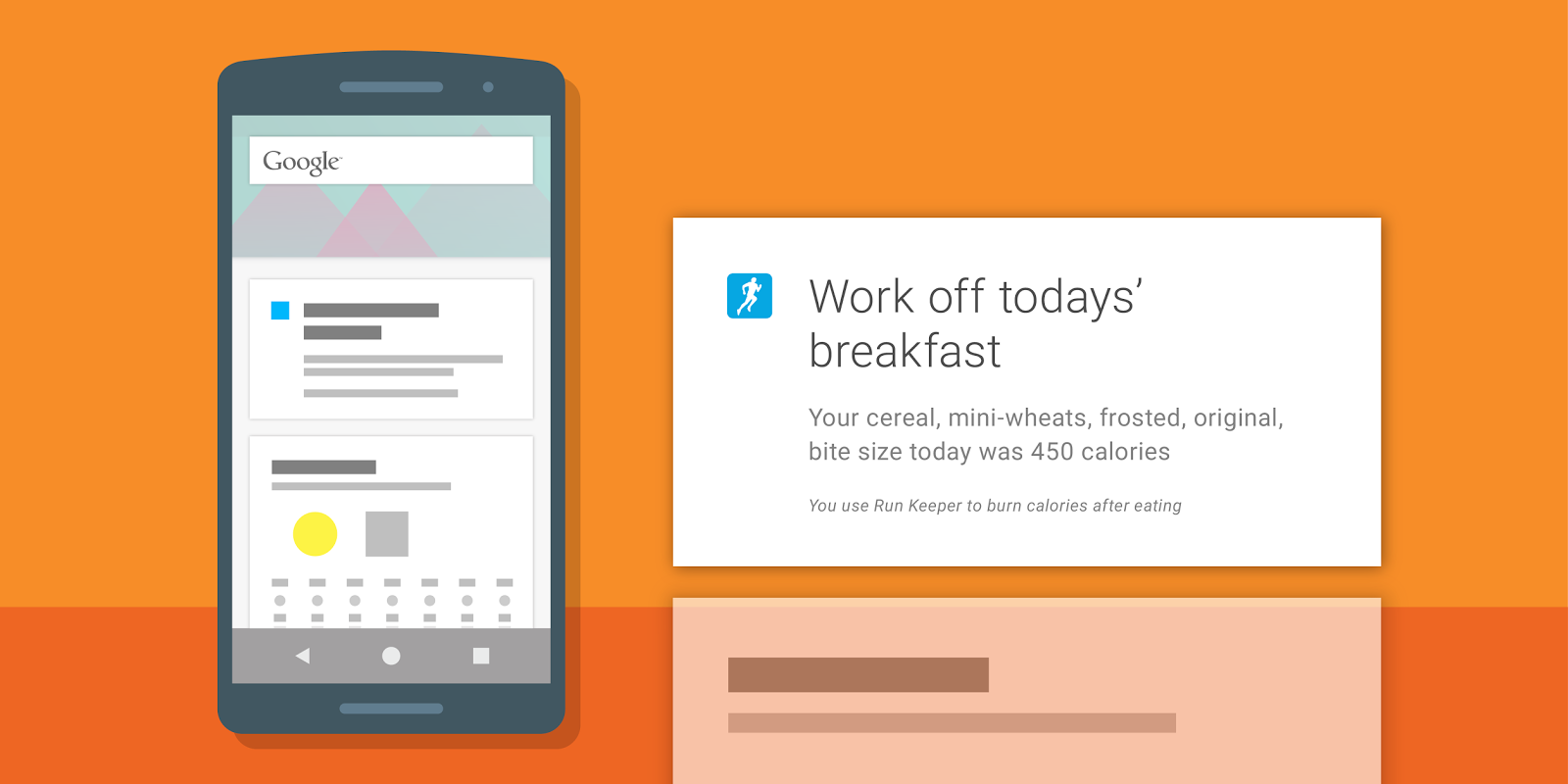
Again, all this data is now accessible to any developer to incorporate into their own apps. For instance, based on meals written to Google Fit by other apps, Runkeeper can now display a Google Now card reminding users to “work off” meals they’ve just eaten. It’s like one big happy family of fitness services and data working together to help keep you in shape.


For those that like beta testing new software, Google mentions that Instaweather has recently integrated Google Fit into a new Android Wear watch face currently in beta. You can try it out by joining the Google+ community here and following the links therein to download the beta version of the app.


For more info on integrating the Google Fit SDK into your own app, check out the developer page here.


[Google Developers]


AT&T gets slapped with $100 million fine for unlimited data throttling


att-store-logo


AT&T seems to have ended up on the FCC’s naughty list. The company has been served with a 0 million fine for misleading unlimited data consumers. Specifically, the company didn’t adequately notify customers that their data would be slowed down to near-unusable speeds if they went over an unspecified threshold.


The FCC says that it’s a violation of 2010’s Open Internet Transparency Rule, a policy that states carriers must be accurate, truthful and upfront about the data services they provide. To be clear, it’s totally within AT&T’s rights to throttle unlimited data, but they also have to tell you that in plain language.


“Consumers deserve to get what they pay for,” said FCC Chairman Tom Wheeler. “Broadband providers must be upfront and transparent about the services they provide. The FCC will not stand idly by while consumers are deceived by misleading marketing materials and insufficient disclosure.”


FCC enforcement chief Travis LeBlanc also added: “Unlimited means unlimited. As today’s action demonstrates, the Commission is committed to holding accountable those broadband providers who fail to be fully transparent about data limits.”


So there you have it. AT&T’s probably never going to do away with their throttling policy for unlimited data users (especially since they’re trying to get everyone onto their Mobile Share plans), but at least the FCC is making sure they’re upfront about it.