Affichage des articles dont le libellé est display. Afficher tous les articles

lundi 6 juillet 2015

HTC One M9 teardown shows how difficult it is to repair a broken display [VIDEO]


HTC One M9 teardown


HTC’s “Uh Oh” protection policy for the HTC One M9 is just another way the manufacturer is giving you peace of mind during your first 12 months of ownerships. Should you crack the display, drop the device in the toilet, or run over it with a car — HTC’s got you covered. The problem? They’ll only do it once.


Those who are little more accident prone — or perhaps just have really bad luck — you may be wondering what happens if you break your HTC One M9 again during this 12-month time frame. Well, you can always pay out the nose to have someone repair it, or you can save a few ducats by attempting to do it yourself.


For anyone thinking about going the DIY route, you may find repairing something as common as the display on the HTC One M9 is a lot more trouble than it’s worth. At least that’s what this handy teardown video brought to us by the folks at pwrdbykyank is showing us.


The lengthy 35-minute video shows that while removing the back of the HTC One M9 is easy peasy, it’s getting at the the display that’s much more difficult. First, you’ll have to remove a variety of screws and tabs, then the main board, and then the battery. It’s only after that you’ll be able to remove the display connector connecting the LCD display. Once that’s been disconnected, you’ll need to heat up the screen (to loosen the adhesive) and use a standard plunger tool to pop out the display from the frame (18:50).


Exhausted yet? We sure are. To be fair, the Samsung Galaxy S6 was no cakewalk either. We have to admit, we’re certainly glad HTC is willing to repair the device completely free of charge during the first year. Whether or not that’s incentive enough to choose the HTC One M9 over the Samsung Galaxy S6 Edge is up to you.


Sony has officially unveiled the Xperia Z4: Snapdragon 810, 5.2-inch 1080p display and 20.7MP camera


xperia z4 side-by-side


We’ve been wondering how long it would take for Sony to officially unwrap their flagship for 2015, but the company did so this morning as they announced the Sony Xperia Z4 in their home territory of Japan. So what’s on tap?


Nothing out of the ordinary, really. This is Sony as we’ve come to know and love them, with a familiar design that has graced many-a phone in the Xperia lineup over the past couple of years.


z4_08
z4_07
z4_05
z4_02
z4_01
z4_06

It isn’t identical to any previous designs, mind you, but the subtle tweaks to things like the outside corners of the chassis and speaker placement are sure to be under-appreciated by all but the most hardcore Sony fans. The Sony Xperia Z4 features a metal frame and doesn’t do anything to compromise its ability to be dust and water resistant, something that has become an important point of emphasis for Sony in recent times.


Under the hood is a different story: this phone is an absolute beast, and no Sony phone has yet to boast such an impressive set of specs. Take a look at what will have its motors running:


  • 5.2-inch 1920 × 1080 display

  • Snapdragon 810 chipset (64-bit)

  • 20.7MP Exmor RS camera with 4K video recording

  • 5.1-megapixel wide-angle selfie cam

  • 3GB of RAM and 32GB of internal storage w/ microSD slot

  • 2930mAh battery

  • 146 x 72 x 6.9mm, 144g

  • Android 5.0 Lollipop


So when can you get it? That question is a bit more tricky to answer. Sony has only given a Summer release expectation as it pertains to Japan’s launch, and didn’t even mention plans to launch in other countries.


We’re sure they will bring it to other markets eventually — their previous flagships have launched for international markets — but there’s no official word or any further details right now. Let us know if you’ll be looking to grab Xperia Z4 should the opportunity to purchase one eventually arrive.


HTC One E9 is a phablet with a 5.5-inch QHD display and huge camera areola on the back


TENAA HTC One E9 China


Last year HTC introduced the HTC One E8, a slightly more affordable, plastic clad version of their popular HTC One M8. Today, images of an HTC One E9 have surfaced, showing a phablet-sized HTC device headed for Asian markets.


The phone was revealed by China’s telecommunications equipment certification center, otherwise known as TENAA, so it’s pretty official. While it’s tough to make out build materials by the images, it does show HTC’s new 2-tone finish on what is likely to be an all plastic Android device. The back features a rather unsightly camera housing, placed all the way along the top of the phone.


Some basic specs were also revealed, showing a 5.5-inch display, 2,800mAh battery, and measuring in at 7.54mm thin. As for the rest, @upleaks chimed in last week to fill in the missing pieces, claiming the phone (A55) will come with a 2GHz MediaTek MT6795 8-core processor (64-bit), 3GB RAM, WQHD display, 20MP/13MP rear camera with 4MP UltraPixel front facing camera, and BoomSound front facing speakers.


HTC press invite China One E9


Other colors include white with rose gold (pictured), metallic gray, or brown and gold. Expected launch date is sometimes towards the end of this month, with HTC already sending out invites for a press event in China where the phone is expected to be unveiled at a price point of around 0.


[TENAA | ithome | upleaks]


DisplayMate says the Samsung Galaxy S6 has the best smartphone display ever


Samsung Galaxy S6 Edge DSC08452


OLED displays haven’t always been the bee’s knees — any owner of a Galaxy Nexus from a bad batch will tell you that — but the technology has come a long way over the years. Samsung’s displays are always considered the best in the business, and that doesn’t change with the Samsung Galaxy S6 and S6 Edge.


Curvy gimmicks aside, DisplayMate performed deep analysis on the displays chucked inside Samsung’s latest handsets and came away impressed — so much so that they’re calling it the best smartphone display ever made.


The display experts put it through an overwhelming gauntlet of tests to come to that conclusion, and if you know their credibility you’ll know it’s hard not to take them at face value. Seeing the device in our various hands-on looks doesn’t do it justice — you’ll have to see it in person, and when you do you’ll most likely be blown away. The Samsung Galaxy S6 and S6 Edge launch April 10th so it shan’t be long for you to get that chance. Head to the source link if you’re interested in a very lengthy pixel-by-pixel analysis.


[via DisplayMate]


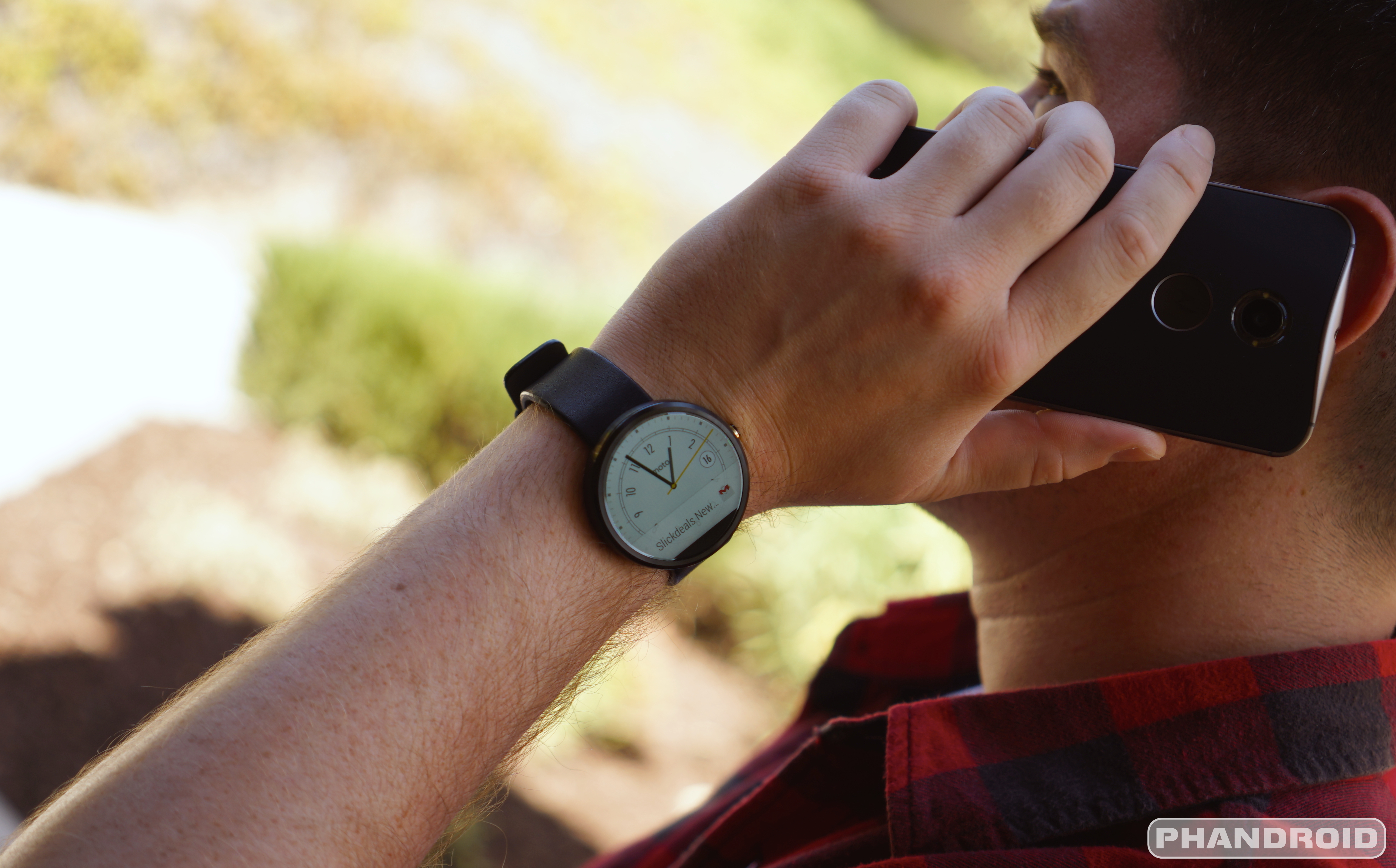
Moto 360 (2015) alleged render shows full 360-degree display, new watch strap [LEAK]


Moto 360 DSC06955


It was 3 weeks ago we got a sneak peek at what could have been a Moto 360 successor courtesy of a Lenovo exec showing off prototypes on the Chinese blogging site, Weibo. More recently, details of the device of what could be the Moto 360 (2nd Gen) — codename Smelt — were uncovered by us, with the device boasting a 360×360 display.


Today, new alleged image of the watch is making the rounds and once again, comes to us from the Weibo. Now, it’s unclear where this person obtained the image, or even if its legit, but it does show a render of a watch that looks extremely similar to what the Lenovo exec was showing off the other day.


Moto 360 2015 leak


The image shows a very similar disc/hockey puck-like design, with new watch straps that feature metal attachable arms. It’s interesting because the previously leaked photos of the prototype device also had arms, but they were attached the smartwatch’s metal frame. These are more like inserts.


Also worth pointing out is the physical button is smack dab in the center, like last year’s model and not off towards the top as in the previous leak. You’ll also notice the the “flat tire” bezel, which housed the watch’s display drivers, is also not present in this render, which we admit looks great.


As is the case with most “leaks,” take this with a huge grain of salt. It’s been a little over a year since the original Moto 360 was officially announced, so we bet we’ll be seeing more of this Moto 360 followup in the weeks leading up to Google I/O 2015.


[Weibo]


LG shows off the new 5.5-inch QHD display for the LG G4


lg-qhd-5.5-inch-g4-display


Like their bitter rival Samsung, LG is a company that prides themselves on making great displays. In the last couple of years we’ve seen LG shrink bezels and bump resolution faster than anyone. LG’s displays are so important that they take the time to separately announce new displays. Today they’re showing off a new 5.5-inch QHD display that will most likely be found in the LG G4.


The new display comes in with a resolution of 1440×2560, which is 538ppi. That’s not much of a difference from the display in the LG G3, but that’s perfectly fine. 2K displays are just starting to become the norm on flagship devices. HTC hasn’t even moved past 1080p yet. Beyond pixels the new display has advanced touch sensitivity and a higher contrast ratio.


LG didn’t make any direct comments about this new display being in the G4, but they did say it will be in a flagship sometime soon. The LG G Flex 2 has already launched, so it’s pretty obvious that we’ll see this display in the G4. More information about that should be available later this month at LG’s event.


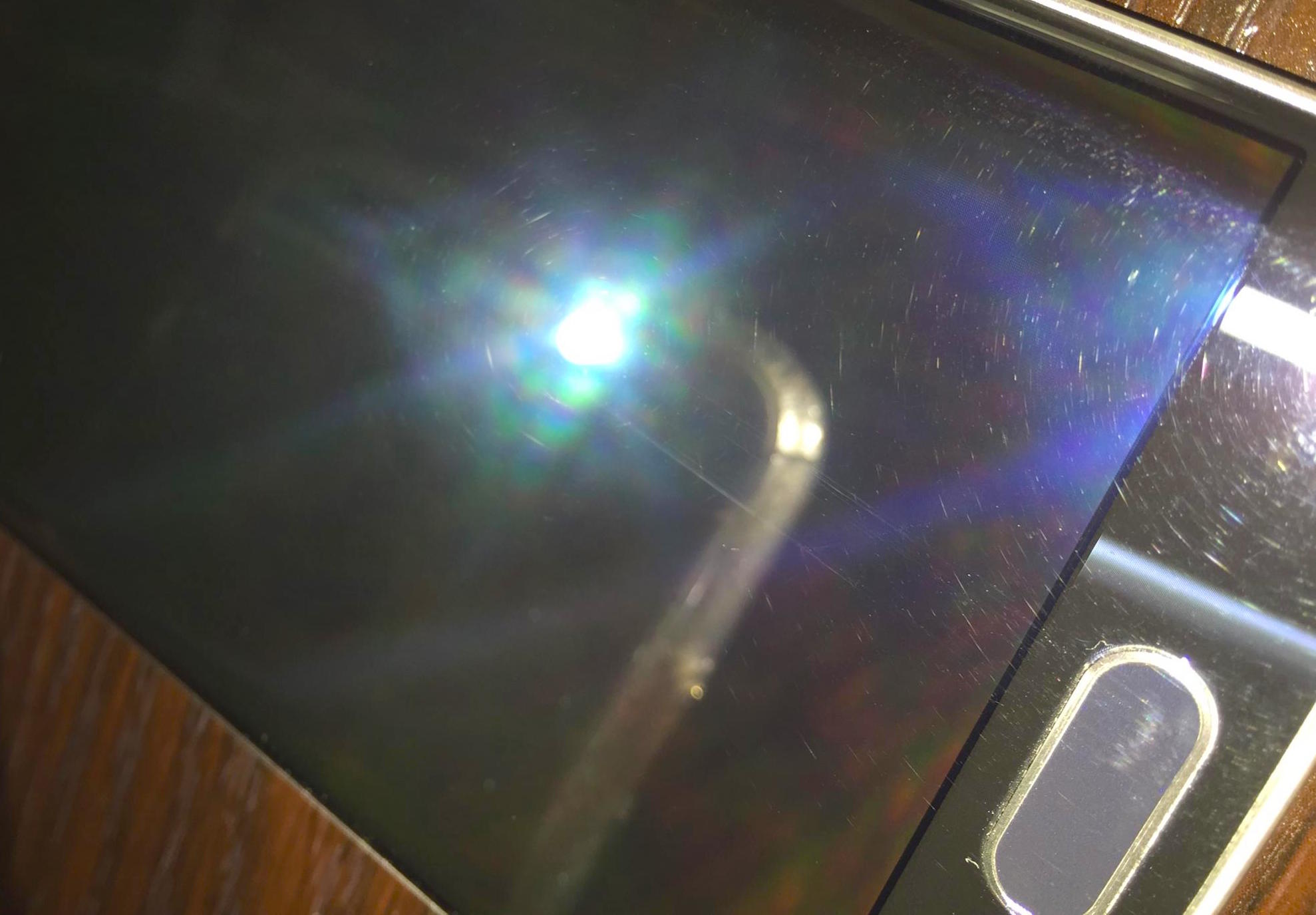
Some Samsung Galaxy S6 Edge units shipping with tiny scratches all over the display


samsung galaxy s6 edge scratches defect 2


When manufacturers churn out hundreds of thousands of devices in order to meet demand, occasionally a bad egg or two makes it past quality control. It’s not uncommon to have one, maybe even a few defective devices slip out when your phone is as popular as say, the Samsung Galaxy S6. So it’s not too surprising to find that some brand new Samsung Galaxy S6 Edge customers have discovered some oddities with their shiny new devices, fresh out of the box.


It’s not #bendgate (thankfully), but as highlighted by XDA Developers, a handful of forum members have discovered what appears to be tiny scratches all over their “new” Galaxy S6 Edge displays. It’s a pattern not too unlike the swirl marks you might find on your car’s clear coat. It’s not clear how they got there, or how wide spread the issue is at the moment, but it’s definitely something you wouldn’t expect to find when unwrapping a 0+ piece of tech. The uploader also makes mention of dead pixels being present when the display is turned on.


Keep in mind out-of-the-box defects like this aren’t unique the Galaxy S6 Edge. Even the folks at iFixit found a scratched display on their freshly unwrapped HTC One M9 (complete with a dead pixel). Like any out-of-the-box defects, issues like this should be taken up with the retailer from whence it came, which happens to be T-Mobile who began shipping out the Samsung Galaxy S6 ahead of its April 10th launch date. There was a single report of an international model also arriving in this same condition, but that could be more isolated.


We should note: this defect seems to only affect the Samsung Galaxy S6 Edge — not the regular flat Samsung Galaxy S6. In any case, now would be a good time to check your device out under a lamp or direct sunlight. Anyone find something similar on their Samsung Galaxy S6 Edge unit?


[XDA]


Latest HTC One M9+ leak shows a phone that looks like One M9 and has a 5.2-inch display


htc one m9 plus comparison


HTC didn’t unveil the HTC One M9 Plus (said to be branded as M9+ by the time it hits retail) like we were hoping and expecting them to, but that doesn’t mean it’ll simply disappear from the rumor mill. The latest information from OnLeaks reveals a couple of new details about the device.


The photo above shows a mockup of the latest prototype OnLeaks saw, and there’s some bad news: it looks like an HTC One M9, only taller and with more gizmos (with said gizmos being the home button / fingerprint scanner splitting the boomsound speakers on the front, as well as the dual camera on the rear. This design is vastly different from the original prototype as shown by @Evleaks.


The screen size of the HTC One M9+ will supposedly be just 5.2 inches, a far cry from phablet territory we were told to expect. That’s about .2 inches bigger than the current HTC One M9, so the devices should provide similar viewing experiences (though the design of the chassis could make its ergonomics differ significantly).


Speaking of the chassis, we also caught wind of the exact dimensions at 150.9 x 72.5 x 10.15 mm. For comparison’s sake, the HTC One M9 clocks in at 144.6 x 69.7 x 9.6 mm, which means the M9+ will be just a hair thicker in depth and a bit more wide thanks to its increased display size.


Even with an increased display size we’re not totally crazy about it being taller than the HTC One M9 by nearly 6 millimeters, but that is necessary to house the supposed fingerprint scanner and dual camera. We’ll have to wait to see its final design to judge whether it makes for a device that’s comfortable to hold vs one that’s needlessly long.


It’s worth noting that there has yet to be any confirmation that HTC is still planning to release this device. As it stands they’re in the very early stages and they could easily decide to scrap the launch if they feel it’s not worth it (which, if the above design is accurate, is becoming increasingly apparent that it isn’t).


[via Twitter 1|2]


2 more LG G4 teasers get us worked up over its Quantum IPS display and f/1.8 camera [VIDEOS]


LG G4 IPS Quantum Display teaser


LG has been teasing the sh*t out the G4. In another round of their quick 15-second ad spots (we already saw the G4’s leather back and UX 4.0 features), the South Korean manufacturer reminds us again that their IPS “Quantum” display will make our eyes bleed, and that their camera has an f/1.8 aperture to capture… you know, buildings and stuff.


You can check them out below but at this point we’re just ready for them to make this thing official like Sony did with the Sony Xperia Z4. Just. Announce it. Already.


Sharp reveals a ridiculous 5.5-inch 4K display, but will smartphones ever need that much?


sharp office


The display arms race has been underway since companies decided Quad HD was the new high-end standard last year, but Sharp says that isn’t enough — displays need to be even more rich and dense than they currently are. The company today announced the development of a 5.5-inch display at a whopping 4K resolution. That’s 3,860 x 2,160 pixels if you aren’t aware, and stuffing all of that into a 5.5-inch form factor stands to bring you a pixel density of 806ppi.


That’s far higher than what the human eye is said to be able to notice, and it should make for a display quality that’s absolutely out of this world. Sharp touted the use of “IGZO” technology that is able to produce a richer picture while using significantly less power, something we imagine was important considering the batteries for the types of devices that these displays will be used for aren’t quite fit to handle such a thing.


A 4K display at this size is seen to be quite useless, though there are many benefits to be had for technologies such as virtual reality where a rich pixel density helps immerse you into whichever virtual world you’re whisked to. We imagine VR will be the initial and primary market for this sort of display, though we wouldn’t be surprised to see smartphone manufacturers wanting to use it just for the sake of saying no other smartphone’s resolution can beat theirs.


We’ll have to wait for its arrival in an actual device to see if there are any significant drawbacks to using the display (such as being more taxing on a mobile processor or sucking a battery dry before the sun sets), but it’ll have to wait as Sharp doesn’t expect to ship these displays until sometime next year.


[via Techblog.gr]


The HTC One M9+ is official, has a bigger display and new processor


HTC_One_M9-_PerRight_GunMetalGray


After countless leaks and rumors the HTC One M9 Plus is finally official. We expected to see this device alongside the announcement of the HTC One M9 (our review), but instead HTC saved it for an event in China. The M9+ takes most of what HTC did with the M9 and improves it very subtly.


The display has been increased from 5-inches to 5.2-inches, and resolutions has been improved from 1080p to 2K. This will make people wonder even more why HTC stuck with 1080p on the M9. The other big change is the processor. There was a lot of controversy around overheating issues with the Qualcomm Snapdragon 810, but the M9+ switches that out for an octa-core processor from MediaTek.


HTC_One_M9-_PerBack_Gold


The M9+ gets the DuoCamera back, but it’s still 20MP, and the 4 UltraPixel front camera is the same. You’ll also notice HTC has also thrown in a fingerprint scanner on the front to round out the new features. Other specs include 3GB of RAM, 32GB of storage, and 2840 mAh battery. We really like the subtle improvements HTC has made, but we can’t help but wish this was the real One M9. The M9+ will likely never be sold here in the U.S.


[via HTC]


HTC officially launches the One E9+ with 5.5-inch Quad HD display and 20 megapixel camera


Oddly enough, HTC has introduced a new phone that’s supposed to be an upgraded version of another phone that doesn’t yet officially exist. It’s the HTC One E9++, a 5.5-inch device with 2560 x 1440 resolution. It also sports a 20 megapixel camera on the rear, an UltraPixel camera on the front, 3GB of RAM and MediaTek’s 64-bit 8-core MT6795M chipset.


Compare that to the regular version of this phone — the HTC One E9 — which we’re expecting to launch with just a 13 megapixel camera, 1080p resolution and 2GB of RAM. We’d assumed HTC would look to wait until their April 8th event in Beijing to reveal this device up alongside the HTC One M9+, but it appears HTC wants to give the M9+ a stage of its own.


The E9+ isn’t likely to travel far outside of China from the starting gate, though there’s a possibility we’ll see it or its lower grade sibling made available for other markets. As it stands HTC hasn’t yet mentioned anything in terms of availability so it’d be wise to wait for official word. In the meantime let us know if you wouldn’t mind this low-cost option up against something like the HTC One M9 for your 2015 smartphone.


[via HTC]


Xiaomi’s $205 Mi 4i offers a relatively big punch: 5-inch 1080p display, Snapdragon 615 and more


xiaomi mi 4i


Xiaomi has announced a new Android smartphone aimed straight at the mid-range market. It’s a 5 Xiaomi Mi 4i, and for that reasonable price tag you’re getting a pretty good set of specs that not many in its price range can boast.


Highlights of the device’s specs include a 5-inch 1080p display, Qualcomm’s octa-core Snapdragon 615 chipset, 2GB of RAM, 16GB of internal storage, a 13 megapixel rear camera, an 5.1 megapixel front camera and a 3,120mAh battery. It’ll run Android 5.0 and MIUI 6.0, which brings your typical MIUI user experience with the added benefits of Android 5.0 Lollipop.


xiaomi mi 4i miui 6


The device will be sold in India to start with a price tag of just Rs. 12,999 — that’s just over 5 — and will be available in white, orange, black, pink and blue. Flipkart will have the goods for you starting April 30th if you’re interested.


Mission Impossible: removing Galaxy S6 glass without destroying the display


galaxy-s6-teardown


Your mission should choose to accept it: gain access to the internal hardware of the Samsung Galaxy S6 without destroying the device in the process. Yes, that’s mission impossible, or, at least, improbable based on the findings of the iFixit’s teardown of the newly available Samsung flagship and its curved partner.


Samsung made some drastic design changes to their Galaxy S line with the release of the S6 and S6 Edge, including the switch to a non-removable battery and the inclusion of glass on both the front and back of the device. This means should you want to access that battery and replace it at some point down the road, those panes could become a real pain. iFixit assigned the Galaxy S6 a repairability of 4/10 mostly due to this fact, noting that it is next to impossible to replace the screen glass without damaging the device’s display.


The score is a drop from the Galaxy S5’s 5/10 repairability, both down from previous Galaxy S models that tended to be favorable for at-home repairs. Other issues with the S6 include the use of extra-strong adhesives holding the phone together and keeping the battery firmly in place along with certain repairs (like replacing the USB port) requiring the removal of the front display (see above about breaking glass and/or display panel).


It would seem the advice would be to avoid prying apart and tinkering with the S6 unless you have a pretty solid feel for this sort of thing (or if you don’t mind a voided warranty and can afford to buy a replacement). The Galaxy S6 is a thing of beauty, for sure, but it is a beauty that is perhaps best admired from the outside alone.


ASUS reveals an 8-inch ZenPad tablet with 4GB of RAM, Quad HD display and USB Type-C


asus zenpad 8


ASUS has had quite the day at Computex. we got a new smart watch and a selfie phone, and you can bet they have a good crop of tablets on the way, as well. This is the ASUS ZenPad 8.0, an 8-inch tablet that can either be very affordable or pack a whole lot of punch (depending on which you fancy).


There’s the base model — simply dubbed the ASUS ZenPad 8.0 — that has a 1280 x 800 display, 16GB of internal storage, an Intel Atom X3 chipset, a 5 megapixel rear camera and more. Not bad for those on a modest budget.


What really gets us excited is the ASUS ZenPad S 8.0, which is a whole different beast. This thing packs Intel’s Atom Z3580 chipset (top-line stuff for their mobile line), 4GB of RAM, 2,048 x 1536 resolution, your choice of 16GB or 32GB of internal storage, a 5 megapixel rear camera, a 2 megapixel front camera and USB Type-C. We’re sure it’s going to be more of a wallet buster than its weaker brother, but with these specs (and ASUS’s history for quality) we’d argue it’ll be worth it.


ASUS also has 7-inch and 10-inch models planned, but the company hasn’t yet released any details about them. We’ll expect the 7-inch variant to be on the affordable side, while they’re bound to go balls to the walls for the biggest option. Unfortunately all we can do is speculate until they unleash some details or we stumble upon some juicy leaks. Either way, the 8-inch tablets are enough to satisfy our undying need for new tech for the time being.


Chinese analyst: Huawei-made Nexus will have 5.7-inch Quad HD display, Snapdragon 810


Nexus_2015


While we’ve been dreaming of what a Huawei-made Nexus could look like, one Chinese analyst claims to already know some hard details of the supposed device. Pan Jiutang — who has a pretty good track record when it comes to uncovering the details of Chinese OEMs’ plans — claims on Weibo that Huawei is indeed the maker of the next Nexus smartphone.


The analyst had more than just confirmation of its existence, though. The device will apparently sport a 5.7-inch Quad-HD display and be equipped with Qualcomm’s Snapdragon 810.


That sounds about par for the course for a smartphone in 2015, though that spec sheet isn’t nearly long enough to satisfy our appetite. We’d expect the next big Nexus smartphone to be compatible with Google’s Project Fi at the least, and we can always expect it to be the catalyst for ushering in the next major version of Android (which recently leaked details revealed might be introduced at Google IO).


[via G for Games]


Lenovo reveals $49 Chromecast competitor, projector smartphone and a smart watch with a 2nd display


lenovo logo


Lenovo had a lot of interesting announcements to make at their Tech World conference in Beijing today. Let’s jump right into the first one: they have made the next big Chromecast competitor.


Simply called Lenovo Cast, this is a dongle that hooks right up to your TV via HDMI. Compare that price tag to the Chromecast (which you can often find even cheaper than that through periodic deals) and it doesn’t sound all that amazing.


lenovo csat


But Lenovo’s pitch here is that their device is fully DLNA and Miracast compliant, meaning you have very flexible and open options for streaming to it (as opposed to Chromecast, which requires developers to add support for it within their apps). Still, there are cheaper options that allow you to do the same (and even more) already on the market so we’re reserving judgment until we see if there are any other unique and redeeming qualities. The device will be available on a worldwide scale this August.


Moving on, Lenovo did have a couple of other announcements that did well to pique our interest. First up is a smart watch that sports a secondary display, a contraption which might appear wonky in mere inner-thought visuals. In actuality, it’s integrated fairly neatly and doesn’t do much to hinder the otherwise good looks of a smart watch.


The question is about functionality and purpose, and the answer is simple: it’s for privately viewing your content. You see, you have to move the smartwatch to your eye to even see what’s on the display. Lenovo’s goal is to let you see what you need to see, and without letting anyone else see what you have to see.


We’re not sure what sort of sensitive content you’d be viewing on a smart watch to need something like this, but there it is. We’d argue covering your wrist with your hand is nearly as effective, but hey — you can’t get mad at unique ideas. Unfortunately this is little more than a concept right now, though the fact that Lenovo has working prototypes is a good sign they want to bring this thing to market.


Lastly, there’s the Smart Cast, a phone Lenovo has dreamed up with a laser projector. A projector on a phone is nothing new — the Samsung Galaxy Beam says hello — but Lenovo’s claiming that theirs can project a fully interactive display onto whichever surface you fancy. Whether it be for typing, playing a virtual piano or whatever, they’re confident they can make it happen.


The core technology already exists, though not within a consumer device such as the one they’ve shown off. Whether we can ever see something like this hit the market remains to be seen, but if Lenovo’s feeling confident enough that they’re on the right track we’ll certainly keep an open mind about it.


Xiaomi Mi Note Pro launches May 12th with 4GB of RAM, 5.7-inch Quad HD display and Snapdragon 810


xiaomi mi note pro 2


Xiaomi today officially unveiled that their Mi Note Pro, a 5.7-inch Quad HD device with a line of specs that will make any participant of the mobile arms race sweat, will launch May 12th. Here’s the spec sheet being touted in case you needed a refrsher of what’s inside:


  • 64-bit Qualcomm Snapdragon 810 processor

  • 4GB LPDDR4 RAM

  • 64GB eMMC 5.0 flash storage

  • 5.7″ 2K (2560 x 1440) display from Sharp/JDI (515 PPI)

  • Sunlight Display technology for unparalleled outdoor visibility

  • 13MP camera with optical image stabilization (OIS)

  • 4G Dual SIM

  • Supports LTE CAT 9 for up to 450Mbps download speeds

  • Hardware-optimized Hi-Fi audio for incredible sound quality

  • High-capacity 3090mAh battery, supports Quick Charge 2.0 (charges up to 70% in 1 hour)

  • Incredible craftsmanship with an aluminum frame and curved 2.5D and 3D glass on the front and back


All of that is coming in at an incredible price point of RMB2999 (about US3).


xiaomi mi note pro 1


That’s a lot of bang for that amount of buck so it certainly has our attention. Unfortunately it does appear you’ll have to import this thing as Xiaomi has only announced plans to make the Mi Note Pro available online in their home base of China starting May 12th.


ZTE reportedly working on a smartphone called the Star 3 with a 5.5-inch 4K display


zte-grand-memo-2-1


We’ve just started warming up to the idea of smartphones outfitted with 2K displays, and already it seems manufacturers could be looking towards 4K in this year’s devices. We’ve heard rumors that Samsung could be looking to equip this year’s Samsung Galaxy Note 5 with a ultra high-def 4K display (up from last year’s 2K display).


Today MyDrivers is reporting that ZTE could be looking to introduce their own 4K smartphone this year, codenamed the Star 3. The device will allegedly come equipped with a 5.5-inch TFT display carrying a eye-blistering 806 ppi. To keep this device from eating up too much battery, the display employs some kind of “crystal structure” tech which is less taxing on the CPU.  The Star 3 will also allegedly feature the world’s narrowest borders, which we assume are in reference to the bezels.


Of course, nothing at this point is confirmed and there’s no real way to validate any of these claims. While we don’t often see ZTE devices launch outside their homeland of China (at least not their high-end models), it would be interesting to see another handset hit the market with such a crazy high spec. It’s still a little too early to say, but it seems 2015 could officially be the year of the 4K smartphone.


Samsung’s mirror display could bring us virtual fitting rooms


samsung mirror display


Samsung had some cool new display innovations to show off this week. First is a next generation translucent display, which has improved colors and contrast compared to the displays we’ve seen pop up over the past couple of years.


But really cool is Samsung’s new mirror display, which can show dynamic imagery while reflecting the world around it. One cool use case Samsung envisions for a clothing boutique is to use it as a virtual fitting room.


Imagine being able to try clothes on without, you know, having to actually put clothes on. It doesn’t do anything to help you get the clothes that fit best, mind you, but you can at least envision how you’ll look once you do.


Samsung’s examples mostly used the reflective displays in jewelry stores and cosmetic departments where these sorts of things could be valuable to a shopper. Whatever they use it for, it’s pretty cool and wouldn’t mind seeing it in a wide range of stores at some point down the line.


[via Samsung]