Affichage des articles dont le libellé est hate. Afficher tous les articles

lundi 6 juillet 2015

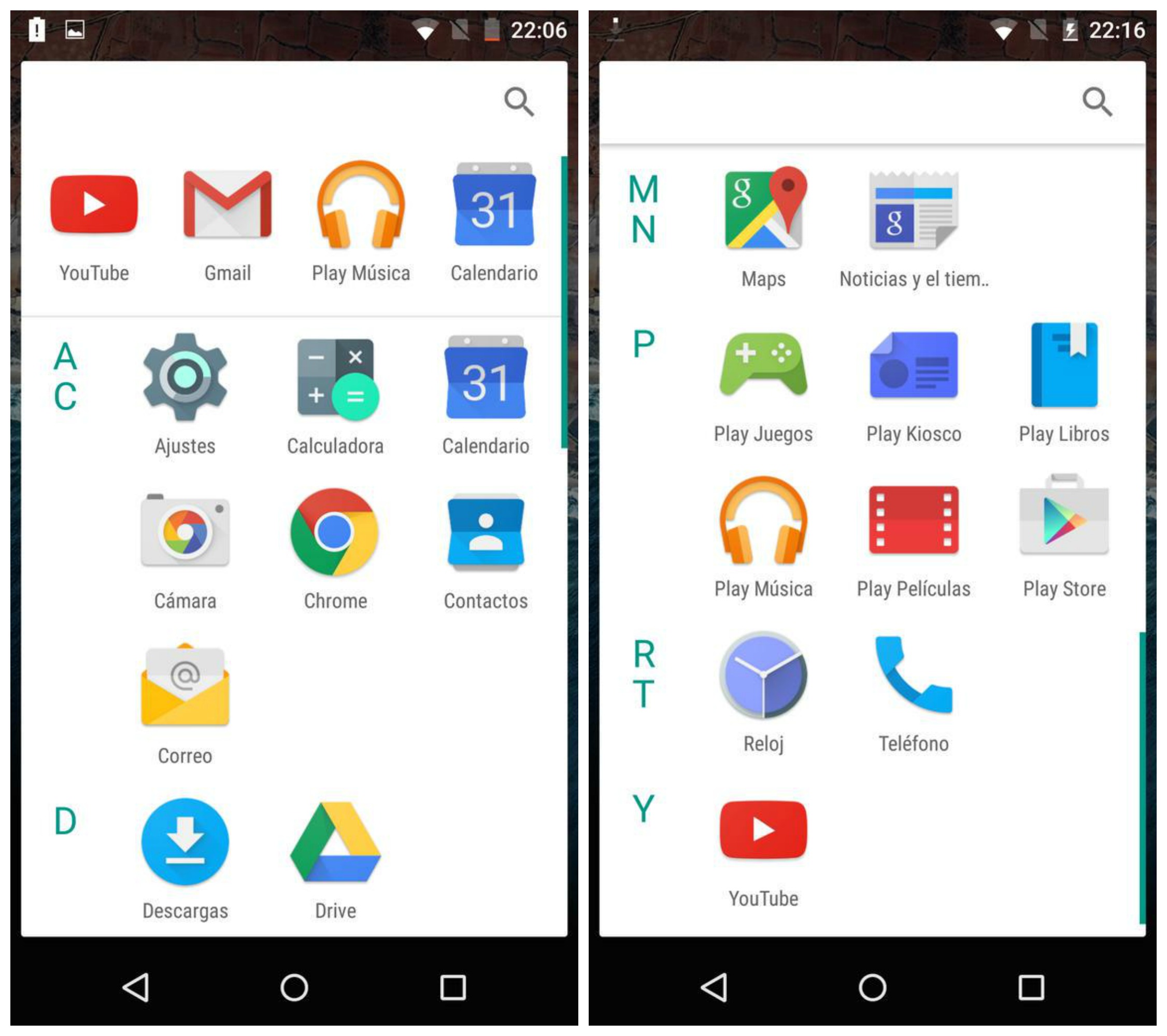
Android M’s new launcher has an app drawer you’re probably going to hate [VIDEO]


Android M app drawer


With the exception of HTC’s Sense UI, it’s been awhile since we last saw a vertical scrolling app drawer on Android. Ever since Ice Cream Sandwich ditched Gingerbread’s vertical scrolling app drawer for a nice horizontally scrolling one, it just felt… well, right. While Froyo’s cubed shaped app drawer will always hold a special place in our hearts, we’ve loved the way vertical scrolling felt.


Last year’s Lollipop update added a little spin on the classic home screen with an all new Google Now launcher featuring easier access to Google Now and white cards in the app drawer. It’s crazy to think that Google is already changing things up again this year and it’s pretty drastic.


The Android M Developer Preview features a new throw-back launcher with an app drawer that scrolls vertically, something we haven’t seen since Android’s early days. Upon opening, a row of recently used apps can be found along the top (something we’ve recently seen in 3rd party launchers) along with apps that are now sectioned off by the alphabet.


You’ll also notice a new app opening animation that kind of zooms out from the app icon itself (although backing out of an app still uses the old Lollipop animation). Oh, and if uninstalling apps from the app drawer wasn’t easy enough, you can now do this by dragging icons straight from the launcher itself. You can see what we’re talking about in the video below.


We have to say, it’s a strange move but of course this is a developer preview and anything can change in time for M’s official release later this year. In either case the vertically scrolling app drawer wont mean much to many of you already invested in one of Android’s many 3rd party launchers.


Thanks, Hernan!


If you hate passwords as much as we do, you’ll love Google ATAP’s latest projects


project-abacus-you-are-your-password-phandroid


It’s another wonderful day of Google I/O and the developer conference is proving that there’s still more interesting developments outside of Android M. During a Google ATAP session, Regina Duggan took the stage to talk about what the special projects unit as been working on.


Project Abacus


One of the more interesting projects is something called Project Abacus. They’ve actually been conducting user trials and gathering data since last year. Everyone knows passwords suck (Duggan actually said this on stage) and Project Abacus looks to eliminate the hassle of typing out or remembering long passwords because simply put: humans aren’t good at this.


Because your smartphone knows more about you than you think, Project Abacus combines a variety of sensor data — how you walk, location patterns, how you talk, how you type — to verify that you are you. In other words, your device is the key to your authentication and it doesn’t even need fingerprint scanning hardware to pull it off.


project-abacus-password-types-phandroid


Project Abacus works passively in the background to continually authenticate you before a website or app or anything else asks you for your password. Based on a trust score, it can verify your identity and you’ll be logged in without having to type a single thing. Higher trust scores could be required from something like a banking app, while low ones for something like logging into a game. Should your device fall into the wrong hands, the trust score will drop and the user will be asked to input a password like the olden days.


Of course, the question on everyone’s mind is how secure Abacus is when compared to other methods of authentication. ATAP says that by combining all this sensor data, Abacus is more than 10 times more secure than traditional methods. We’ve seen enough movies to know that anyone can pop out your eyeball or cut off your fingers — wouldn’t it be great if you phone knew you were you?


Project Vault


project-vault-announcement-phandroid


Another interesting project to come out of Google ATAP’s session is something they’re calling Project Vault. ATAP says Vault is tiny, security dedicated computer squeezed into a micro SD card. It uses a suite of encryption primitives to act as a digital mobile safe for your most sensitive data, anything from chat conversations to files and everything in between.


Using a driver-free interface, Project Vault partitions a portion of an SD card to store data and works out of the box on a variety of platforms outside of Android (like full fledged Windows PCs). ATAP says that Vault more or less aimed at the enterprise market for now and like most things to come out of Google I/O, still in its early stages but will soon have an open source SDK for developers.


The Confederate flag is being purged from app stores everywhere in light of hate crime


AmericanCivilWar_SplashScreens


When a mass shooting that seems to be motivated by racial hate happens, you can expect it to make ripples throughout nearly all the lands. That’s what’s happened in the recent mass shooting in South Carolina, where a white male (who apparently identifies as a white supremacist) killed 9 and injured more at a historically black church.


Retailers everywhere rushed to remove merchandise that showed the Confederate flag from their stores. In case you don’t know, the Confederate flag was originally created as a symbol of pride for the Confederacy during the Civil War, but has since become a symbol of hatred for those who preferred the status quo of those dark times.


But it doesn’t stop at retailers alone. Google and Apple are seemingly following suit for digital goods, with the companies purging apps and games from their respective app stores which depict the confederate flag (such as HexWar Games’ title, which uses the flag for historical accuracy).


hexwar games


On Apple’s part, they say their current policy will be to remove apps and games which use the flag in obscene and offensive ways, and will reinstate apps and games which use it for educational purposes only. We imagine Google’s policy lies along similar lines, though we have not yet heard from the company regarding their official stance.


This touchy subject isn’t bound to end here. The quick move to oust these apps has many folks crying out and wondering why goods featuring other offensive symbols, such as the Swastika, haven’t been met with a similar response.


swastika apps


The Swastika has a similar history in that it was originally used as a symbol of good (or, at least, good-willed) ideals, but was later perverted by Hitler and Nazi Germany and is particularly offensive to Jewish people (or anyone who simply detested Nazism). The difference here seems to be that there haven’t been many known hate crimes against the party which that symbol primarily offends in recent times.


Of course, the one big realization in all of this is that we don’t even know if this was a hate crime yet. It looks bad and it happened in a southern state that played a big part in American slavery, sure, but there’s no official justification for calling this a hate crime until the Department of Justice rules it as such (even though police have concluded that the attack was racially motivated).


The early reaction from retailers and technology companies is likely more about them trying to win positive PR, or at the least trying to prevent any potential negative variants.


And that’s all it is. The apps being wrongfully removed are likely to be back at some point, and we’re probably better off for all the others to simply be forgotten.


[via Engadget]