Affichage des articles dont le libellé est later. Afficher tous les articles

lundi 6 juillet 2015

Microsoft’s Cortana will be coming to Android later this year


google cortana


It’s been a while since we last heard rumors of Microsoft’s Cortana coming to Android. Way back in June of 2014 a manager from the Windows Phone team talked about the possibility of Cortana coming to other platforms. Now we’re hearing from Microsoft’s Eric Horvitz, managing director of Microsoft Research, that they are planning a bigger roll-out for Cortana later this year.


Microsoft is currently planning to bring Cortana to the desktop in Windows 10, which could be the perfectly opportunity to launch on Android and iOS as well. You might be thinking “why would Microsoft bring one of the best features of Windows Phone to competing platforms?” The new Microsoft under CEO Satya Nadella is focused on getting more people using Microsoft services. Just look at all the apps they already have in the Play Store.


The big question for most Android users will be “why should I use Cortana?” Microsoft will have a tough job convincing users to switch away from the tightly integrated and powerful Google Now. When Cortana originally launched in beta 0n Windows Phone 8.1 we put it up against Google Now. A lot has changed since then, but it’s still a good look at the two services side-by-side.


Will you give Cortana a shot when it comes to Android?


Google holds off on device encryption requirements for a later version of Android, but why?


Android 5.0 Lollipop DSC07205


In Google’s efforts to make Android a more secure platform, the company once required that all devices with Android 5.0 Lollipop or higher would have key partitions of the system disk permanently encrypted upon first boot. The Nexus 6 and Nexus 9 — the first publicly available devices with Lollipop — sure enough followed suit.


But several other devices to launch with Lollipop since then seem to come without encryption enabled. Many of the newest handsets introduced at Mobile World Congress are also found to have no encryption. So what, exactly, is going on?


Google quietly changed their Android Compatibility Definition policy to say that OEMs are no longer required to enable encryption on their phones out of the box. They still have to support encryption, but there’s nothing that says they have to enable it out of the box.


9.9 Full-Disk Encryption


If the device implementation has a lock screen, the device MUST support full-disk encryption of the application private data (/data patition) as well as the SD card partition if it is a permanent, non-removable part of the device. For devices supporting full-disk encryption, the full-disk encryption SHOULD be enabled all the time after the user has completed the out-of-box experience. While this requirement is stated as SHOULD for this version of the Android platform, it is very strongly RECOMMENDED as we expect this to change to MUST in the future versions of Android.


Does that mean Google’s vision for an encrypted Android is dead? Not at all. In fact, the company notes that they will be reintroducing the requirement for a later version of Android, and it’s that very reason they urge manufacturers to make a habit of enabling device encryption by default.


So that answers the question of why new devices aren’t coming encrypted out of the box. Now the question changes: why has Google decided to hold off?


Google_Lollipop


The likely answer is that device encryption either isn’t as ready as they thought it was, or that it’s too messy for an OEM to implement if they haven’t designed their phones with the encryption requirement in mind. Device encryption was blamed for the problematic performance issues of the latest Nexus devices (we even showed you how to disable it on the Nexus 6 to boost performance), though Google has yet to confirm whether it’s that feature which causes the issues.


For what it’s worth we’re hearing that many of the issues will be cleared up with the big Android 5.1 Lollipop bug fixer that’s due later this month so perhaps that’s the future version of Android Google is referring to. The delay might also give OEMs more time to adjust their firmware and hardware to handle device encryption more efficiently. Adjustments might include the use of a faster file system and faster flash storage.


Of course, only Google and their OEM partners know the true answer so we’ll have to wait for more details to leak before knowing why, exactly, they’ve decided to shelve the requirements.


[via Ars Technica]


BLU is making a Cyanogen OS phone later this year that won’t have any Google services


cyanogen_logo


Cyanogen has been alluding to this for a while now, but they’re about to partner with someone on a phone that doesn’t rely on any of Google’s services. That much was revealed to Forbes in a profile about the up-and-coming company after they’d announced an million Series C funding spurt.


The partner is BLU, a budding maker of budget smartphones that actually aren’t bad for their low cost. The details are thin right now, but the smartphone is said to be on tap later this year and will use a variety of apps and services to replace what Google’s suite provides. Here are just a few examples of which apps BLU’s CEO thinks can be used to replace the popular ones Google provides:


  • Amazon’s app store for downloading new apps and games

  • Opera’s web browser

  • Nokia Here for maps and navigation

  • Dropbox and Microsoft’s OneDrive for cloud storage

  • Spotify for music.

  • Bing for search

  • Microsoft’s Cortana as a replacement for Google Now


But the big question remains: will this be successful? If so, how? And — more importantly — why do they even want to do this? Kirt McMaster’s promise to “take Android from Google” was recently reiterated by stating he believed his company was going to put “a bullet through Google’s head.”


Cyanogen Inc new logo


At this point, Cyanogen’s motives don’t seem all that clear. If we’re to draw examples from a high school social setting, their behavior (or that of the mouthy CEO’s, anyway) is akin to taking the ball from the 10 other kids enjoying a fun game of kickball for no reason than to be heady and rebellious.


Perhaps the reason isn’t clear to someone not involved with the day-to-day workings of the company, but our idea of making a new OS with a new ecosystem and new services isn’t “we’re going to dump everything Google, and replace them with offerings from other random companies.” One might assume this play is simply about money, and Cyanogen’s only gravy train is to strike deals with developers and companies to get their apps preloaded on these devices.


With no apparent rhyme or reason Cyanogen wants to be as far away from Google as possible, and we still have no idea why. It’d be nice to know, though, so we’re hoping those questions are answered as we inch closer to the release of this smartphone (and we’re hoping they’re answered in a far more tolerable tone than McMaster’s latest blurts).


Oculus Rift consumer launch confirmed for Q1 2016, pre-sale later this year


oculus rift protoype


The folks at Oculus Rift have confirmed a final shipping window for the consumer edition of their virtual reality headset. It’ll be out at some point in Q1 2016, with pre-sales for the device commencing this Wednesday, they’ve announced.


With that, the company released some final renders of what the consumer product will look like once it touches ground next year. You’ll find that it’s a refined version of the Crescent Bay prototype that they’ve been worked on largely throughout its entire development, which is great considering that design was already pretty slick.


Developers have had their hands dipped in the Oculus Rift SDK for quite some time now, and the company has assured us that the earliest efforts will be showcased at their big E3 showing next month.


While other companies have already started introducing viable virtual reality solutions — either through the use of smartphone-augmented units like the Samsung Gear VR or standalone goodness such as HTC’s Re Vive — but Oculus Rift still seems poised to present one of the most ambitious consumer-ready virtual reality experiences to date. We’ll have to wait until June to find out what, exactly, they’re looking to do to make that happen.


[via Oculus Rift]


LG G Watch R doesn’t support WiFi right now, but it will later this year


g-watch-r-wrist


If you have an Android Wear device, chances are you’re pretty hyped about the latest software update. Aside from improving upon the UX, Android Wear 5.1.1 — which still hasn’t hit the Moto 360 — was able to unlock dormant WiFi radios located on most of devices. Of course, we know the LG G Watch definitely wasn’t on that list, but for the LG G Watch R, things were a little wishy-washy.


Whereas the original G Watch didn’t have the necessary hardware, the LG G Watch R (it’s round sibling) actually does, it’s just that for whatever reason wouldn’t be enabled in 5.1.1. Fast forward to today where an LG spokesperson is now saying a future maintenance release will, in fact, activate the LG G Watch R’s hidden WiFi functionality. According to the statement provided to AndroidWorld, LG plans to push out this update sometime in the 3rd quarter.


“LG Watch Urbane is the only wearable device Currently shipping with the latest version of Android Wear OS and is Wi-Fi capable out of the box. The original LG G Watch was not designed with Wi-Fi in mind and will not have this capability even after the Android Wear update. LG G Watch R will require a maintenance release after the patch update to Android Wear-access Wi-Fi networks. LG engineers are preparing the patch now for availability in the third quarter.”


So, if the lack of WiFi was a make-or-break for you, don’t worry. In a few months time, you can expect the LG G Watch R to connect to WiFi networks the same as most other Android Wear smartwatches. Anyone who already purchased the watch, feeling better now?


Verizon’s Sony Xperia Z4v comes with Snapdragon 810 later this summer


sony xperia z4v


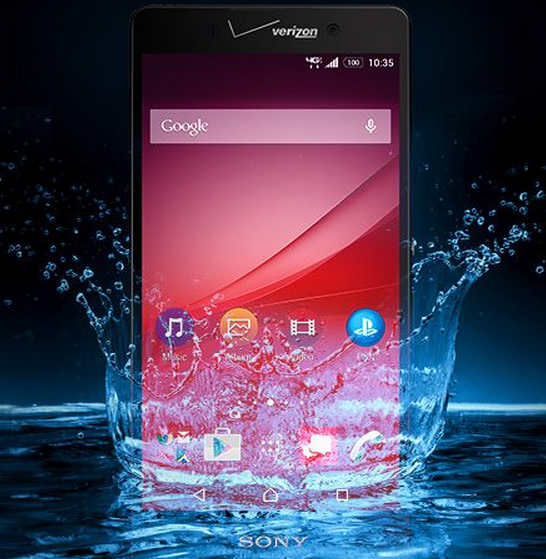
Verizon has announced that they’ll be carrying the Sony Xperia Z4v later this summer. Their variant is a bit more beefy internally than the regular Xperia Z4, although it still uses the same Snapdragon 810 chipset. It’s a 64-bit piece of silicon that has gotten flak for apparent overheating issues, but it’s still a pretty powerful beast.


Their device also sports 2560 x 1440 resolution for its 5.2-inch display, as well as a roomy 32GB of internal storage (with microSD for expansion, if you need). You can also expect a 3,000mAh battery with built-in wireless charging (both Qi and PMA standards) and Quick Charge 2.0. Finally, you’ll get a 20.7 megapixel Sony sensor on the rear and a 5 megapixel camera on the front for your photo and video taking needs.


Verizon only had a “this summer” date to give us, though that’s not too long of a wait considering we’re already deep into the warm months. It’ll be available in Black or White. Be sure to sign up to be notified for more information once its launch nears right here.


HTC Aero looks to be the company’s new hero device launching later this year


HTC One M9 Custom Nav Bar DSC08929 copy


Earlier this month, HTC chairwoman and CEO Cher Wang spoke during with investors during a general shareholder’s meeting about the company’s lackluster performance during the previous quarter. It was there she made mention of a new hero device her company would release at toward the end of the year, but didn’t provide any details. Of course, this sparked our interest as HTC fans who loved last year’s HTC One M8, but felt the recently released HTC One M9 missed the mark.


If recent tweets from former tipster @evleaks (Evan Blass) are any clue, this device could be known internally as the HTC Aero. Blass mentioned the phone — which is allegedly launching in Q4 — earlier this week in a tweet to Android developer LlabTooFeR ‏who provided new launch details on the HTC One M9+ (coming to European markets in Q3). @Upleaks seemed to confirm its existence and possibly that it will carry a Snapdragon 820 SoC.


And that’s where the trail runs cold. With knowledge of this new HTC hero device out there, we imagine it wont be too much longer before the leaks begin to follow. For now we can only sit and wonder what the future holds for HTC and with the Samsung Galaxy Note 5 and possibly a pair of Nexus devices set to launch later this year, they’ll certainly have their work cut out for them.