Affichage des articles dont le libellé est would. Afficher tous les articles

lundi 6 juillet 2015

Cyanogen CEO: OnePlus would have only sold one phone outside of China without CyanogenMod


Cyanogen Inc new logo


You can officially close the books on the OnePlus and Cyanogen marriage. If Steve Kondik’s assertion that you likely won’t be seeing any more collaborations from the two didn’t cement it, perhaps CEO Kirt McMaster’s penchant for saying the wrong things at the wrong time will.


The heady CEO spoke at the Global Mobile Internet Conference in Beijing, and laid out this following juicy nugget:


Without Cyanogen, OnePlus would have sold like one device in international markets. Essentially they built their brand on the back of Cyanogen.


Whether McMasters’ comments are true remains to be determined, though we’re sure he could have made his point with a bit more class. It’s natural for the CEO to feel good about his company’s position, what with them securing a major partnership with Microsoft, and all. They’ve also gotten deals inked with major Chinese OEMs, Qualcomm and more to get Cyanogen loaded up on phones and development devices as soon as 2015.


There’s no doubt Cyanogen is great, but to suggest OnePlus would have been next to nothing without them is quite the boisterous stance. Luckily for OnePlus, there’s a chance to prove everyone wrong with a follow-up that runs software built by the folks who make what many consider to be the second best ROM in the land — Paranoid Android.


[via PCWorld]


This is why Android “Marshmallow” would make for an awesome name


Android Marshmallow Man


We currently don’t know what the “M” in “Android M” will stand for. Google didn’t give us much help with the usual Easter Egg, but a presenter at Google IO may have narrowed it down a bit. It seems the three leading candidates are milkshake. milky way, and marshmallow. A Redditor shared his thoughts on why Android Marshmallow would make for an awesome mascot, and we have to agree.


This image is, of course, a nod to the Stay Puft Marshmallow Man from the original Ghostbusters movie. It’s super cute, and would make a great statue for the front lawn of the Android building. Plus, there could be some tie-ins with the upcoming Ghostbusters reboot. The again, with the speed of Android updates we might be speculating about Android N before the movie is released.


What do you think about the potential for Android Marshmallow? Which M-themed dessert do you think will be the winner?


If Material Design was a game, it would look like these three Android games [VIDEO]


I love simple games and I love Material Design. So when I first discovered a game called Bing Bong I was very excited. It combined simple and addictive gameplay with a Material-esque design. Then I found out that the same developer had made other games with the same style. The three games can stand on their own, but together they make for an addictive combination. Let’s take a look.


Bing Bong


Bing Bong screens


I’m not sure which game came first, but Bing Bong is the one I played first. In this game you control a green dot that is constantly going up and down across a street of traffic. Each time you successfully get to the other side you earn a point. You have to avoid blocks of varying sizes to cross the street. The green dot is constantly moving, but you can slow it down by pressing your finger on the screen.


The game becomes all about timing. Will you be able to make it past that block at full speed? If you slow down now will that make you hit the next block? You’re constantly adjusting your speed to perfectly cross the street unharmed. It’s easy at first, but gets difficult quickly.


Righty Tighty


Righty screens


In Righty Tighty you play as a red dot. Your goal is to collect the white dots and bring them to the goal. The red dot is constantly moving, but every time you tap the screen it will make a right turn. Like in Bing Bong, there are blocks of varying sizes constantly crossing your path. Also, the red dot is constantly growing, which makes it increasingly more difficult to avoid obstacles. You have to return a white dot to the goal to reset your size.


Pivot


Pivotscreens


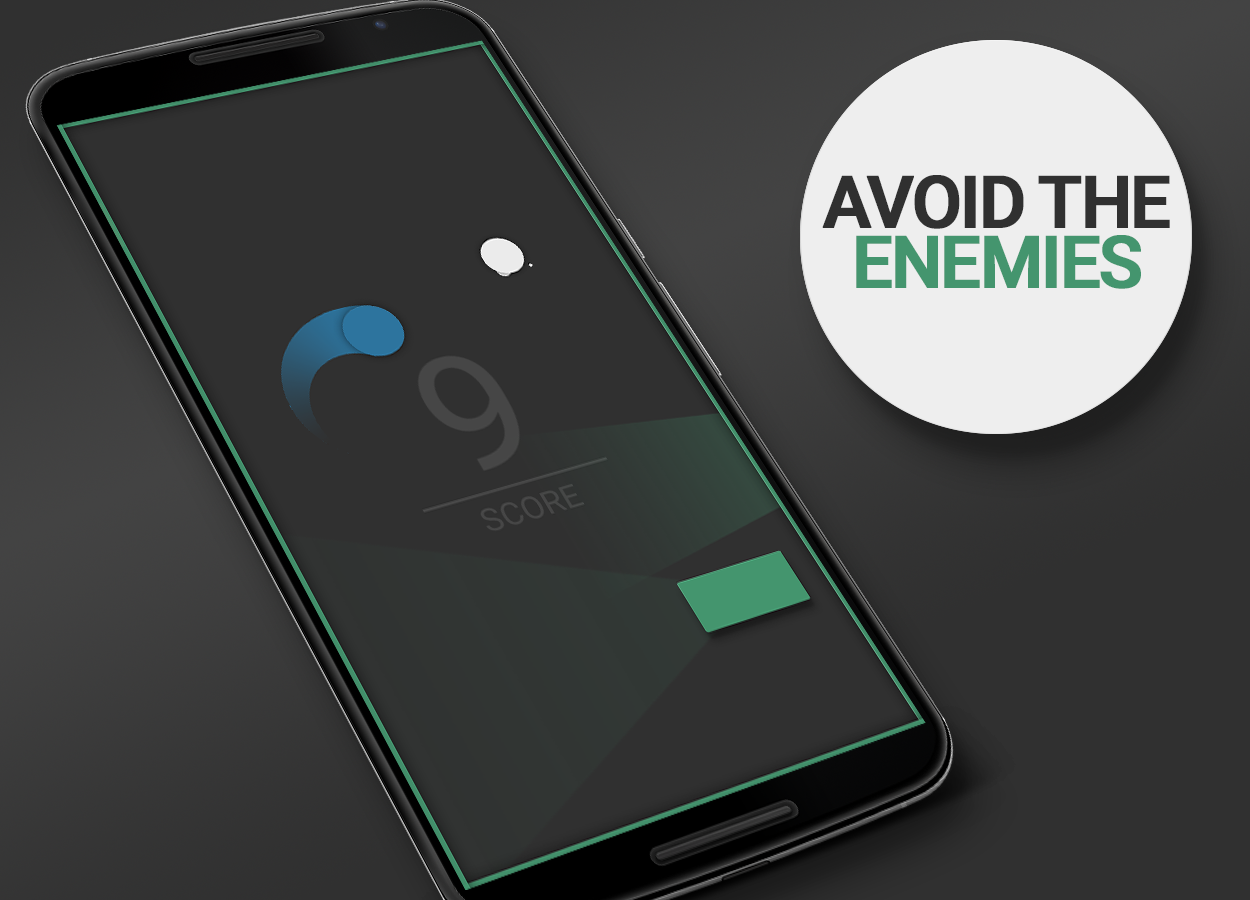
The simplest of the three games is Pivot. You play as a blue dot this time, but you still have to collect white dots to earn points. The blue dot is constantly moving in a circular path. Tap your finger on the screen to go in the opposite direction. There are no goals this time. You get a point for simply collecting a white dot. Blocks of varying sizes are still trying to get in your way, and the wall is also an obstacle.


***


I like these games a lot because they feel like a family. Each one has its unique aspects, but they all share the same basic foundation. They’re beautifully simple, yet extremely addictive. The developer has done a great job with the little details, like how the music intensifies the longer you survive in Bing Bong.


All three games have Google Play Game integration for leaderboards and achievements. The games are free with very few ads (which can be disabled completely for .99). You can download all three in the Play Store. Enjoy!


Dish and T-Mobile are considering a merger, and John Legere would be named CEO of the new pact


T-Mobile_US_Retail_Store_in_Waterbury,_CT


T-Mobile is trying to get swept off their feet by a company willing to take on their burdens, and a new candidate has arrived. The Wall Street Journal reports Dish and T-Mobile are in talks about a possible merger deal.


The talks are only in the “formative” stages, according to them, so there’s nothing concrete being planned just yet, but the fact that the two sides are talking is still quite a big deal. The deal stands to be lucrative for both sides.


Dish Network has been trying to swallow up a carrier for a few years now, with a failed attempt at Sprint and Clearwire being their biggest highlights. Meanwhile, T-Mobile’s plans to to sell themselves off to another carrier or any telecommunications company in need of a solid cellular division are well documented, particularly in 2011’s failed merger between them and AT&T.


For its part, Dish was interested in T-Mobile even before the AT&T deal failed. The company expressed their interest in taking a swing at T-Mobile if they were still on the market after antitrust investigations and trials, so you could say this has been a long time coming.


We’re not sure how the market would react to such a proposal, but we can’t seem to draw up a scenario where the Justice Department would shoot it down on fears of anti-competition and antitrust. Neither company has a significant stronghold in their respective industries, so fears that the merger would create a monopoly would seemingly be unwarranted.


One interesting detail Wall Street Journal did pick up on was that John Legere would be named CEO of the new company should they join forces, while Dish’s CEO Charlie Ergen would serve as chairman of the board.


We aren’t surprised the company would want Legere at the head of the beast considering he has turned T-Mobile around in a big way these past couple of years. He’s also the sort of edgy and bold CEO companies yearn for in this day and age (particularly due to his strength in appealing to the common consumer).


“Plans” are all they have right now, though, and there’s likely a lot of details to hammer out before we see anything official. Heck, it’s just as likely that they might call the whole thing off before they even get to inking some legal paper.